



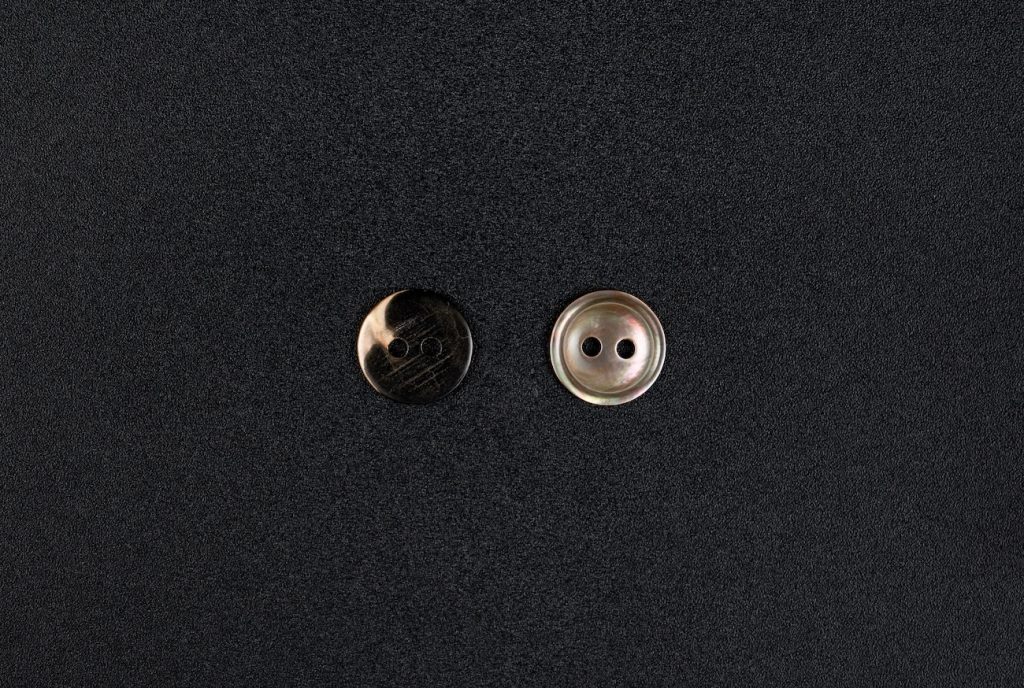
In the world of high-end fashion, the smallest details often speak the loudest. While a button might seem like a minor accessory, its failure—whether through cracking, fading, or misalignment—can compromise an entire garment’s value. Understanding shell button quality standards is essential for designers and sourcing managers who refuse to compromise on excellence.
Key Factors Influencing Shell Button Durability
The durability of a natural button is not accidental. It is a result of three primary factors that we monitor closely at the Tuấn Hiền factory:
1. Shell Material Integrity
Not all shells are fit for high-stress environments. We source mature, dense shells from marine and freshwater environments. Mature shells have a more compact crystalline structure, which significantly improves the shell button quality standards regarding impact resistance.
2. Thickness and Finishing
A common point of failure in cheaper alternatives is inconsistent thickness. A button that is too thin will likely crack during the garment finishing process or under the pressure of industrial dry cleaning. We maintain a strict tolerance level (±0.1mm) to ensure structural stability across every batch.
3. Polishing and Heat Resistance
Natural shell buttons must withstand the heat of industrial irons. Our specialized polishing process doesn’t just add shine; it creates a protective barrier that preserves the button’s integrity against high temperatures and detergents.
Our Multi-Stage Quality Inspection Process
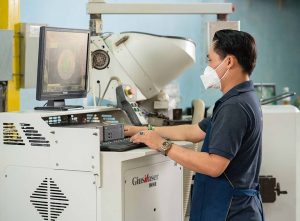
To maintain world-class shell button quality standards, Tuấn Hiền Shell Button employs a rigorous quality control (QC) protocol that every single batch must pass before export.
-
Visual Grading: Our technicians inspect for natural flaws, ensuring color consistency (especially for Mother of Pearl) and surface smoothness.
-
Dimensional Precision: Using digital calipers, we verify the diameter, thickness, and, most importantly, the hole alignment. Misaligned holes are a nightmare for automated sewing machines in large-scale factories.
-
Stress & Strength Testing: We perform “shatter tests” on samples to simulate the wear and tear of long-term garment use. This ensures our products meet international ISO 105-C06 standards for domestic and commercial laundering.
Why Quality Matters for B2B Buyers and Export Markets
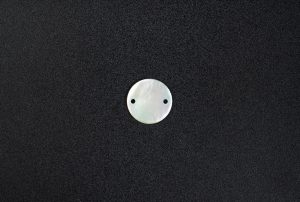
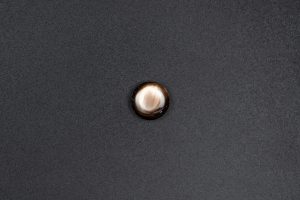
For garment exporters in Vietnam, adhering to strict shell button quality standards is a strategic advantage:
-
Reducing Defect Rates: Consistent button quality means fewer line stoppages and lower rejection rates during final garment inspection.
-
Brand Reputation: Premium brands like those in the EU and US market equate natural shell buttons with luxury. A broken button is seen as a failure of the brand itself.
-
Compliance: Many international buyers require certifications such as OEKO-TEX Standard 100. Our quality process is designed to meet these stringent chemical and physical safety requirements.
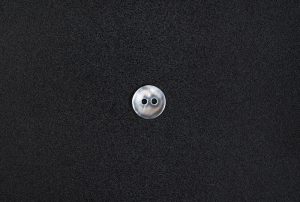
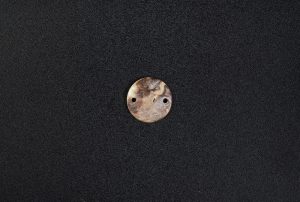
(Alt text: Professional shell button quality standards inspection at Tuấn Hiền factory)
The Importance of Uniformity in Large-Scale Orders
When a factory orders 100,000 units, uniformity is the biggest challenge. Natural materials vary by nature, but through advanced sorting technology, we achieve a level of uniformity that rivals synthetic materials while keeping the unique “soul” of the natural shell. This balance of nature and precision is what sets our shell button quality standards apart from local competitors.
Your Partner in Excellence
Quality is the foundation of trust in the B2B fashion industry. By choosing Tuấn Hiền Shell Button, you are not just buying a trim; you are investing in a guarantee of durability. We ensure that every button leaving our facility in Vietnam is ready for the global stage.


