

Table of Contents
-
Introduction to Sourcing Costs
-
What Affects the Shell Button Price List?
-
Material Type and Raw Costs
-
Size and Thickness Specifications
-
MOQ and Economies of Scale
-
Customization and OEM Options
-
Conclusion and Next Steps
Welcome to our comprehensive shell button price list guide. Shell button prices vary depending on several production factors, and understanding these variables is essential for garment manufacturers placing bulk orders.
When you source natural accessories, you are not just buying a standard product off the shelf. You are purchasing a crafted item derived from natural resources. At Tuấn Hiền Factory, we prioritize transparency. This guide will help sourcing managers and fashion brands accurately forecast their production costs.
What Affects the Shell Button Price List?
A fixed, one-size-fits-all shell button price list is rare in the B2B manufacturing industry. Because every fashion collection has unique requirements, prices fluctuate based on specific technical and logistical criteria.
By breaking down the core cost drivers, buyers can make informed decisions to optimize their supply chain budget without compromising on the garment’s premium quality. Let’s explore the main elements that shape your final quotation.
Material Type and Raw Costs

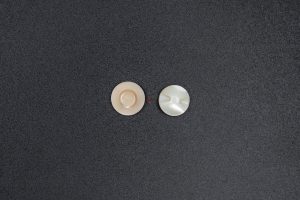
The most significant factor influencing any shell button price list is the raw material itself. Not all shells are created equal, and their market availability dictates the baseline cost.
-
River Shell (Agoya): This is the most abundant and cost-effective material. It is the perfect choice for high-volume, mass-market apparel where budget optimization is key.
-
Mother of Pearl (MOP): Known for its luxurious iridescent glow, MOP is significantly rarer and harder to harvest. Consequently, it commands the highest premium on our price list.
-
Trocas Shell: Sitting comfortably in the middle, Trocas offers excellent durability and a beautiful off-white color, making it a popular choice for mid-range to premium fashion brands.
Raw material costs are often subject to global market fluctuations. You can read more about how commodity markets and natural resource economics impact global manufacturing prices.
Size and Thickness Specifications
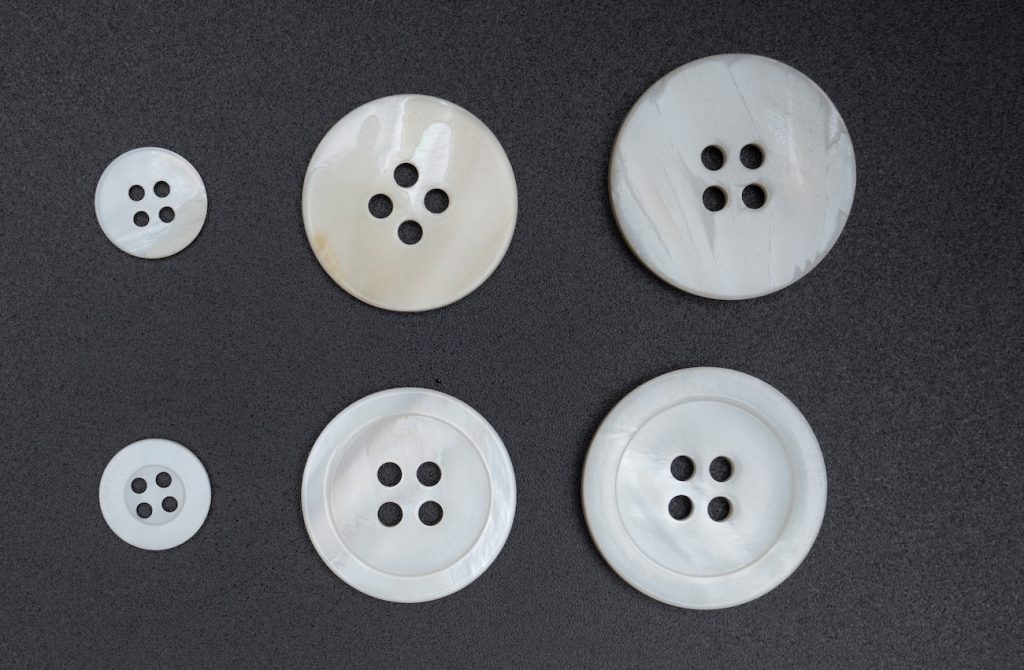
In the manufacturing of natural buttons, physical dimensions directly impact the shell button price list. Larger sizes and greater thicknesses require more raw material.
More importantly, creating thicker buttons results in a higher rate of material waste during the cutting and blanking process. A standard 2mm thick button will be noticeably cheaper than a custom 4mm thick button. Furthermore, unusually large sizes (such as 32L or 40L) require the largest and most flawless shells, which are naturally scarcer, thereby increasing the unit price.
MOQ and Economies of Scale
In B2B trading, order volume is a powerful negotiation tool. The Minimum Order Quantity (MOQ) significantly alters the figures on your shell button price list.
Setting up machinery, calibrating cutting tools, and preparing dye baths take the same amount of time whether we produce 1,000 buttons or 100,000 buttons. Therefore, massive bulk orders benefit from economies of scale. The larger your order volume, the lower your unit cost will be. We provide tiered pricing structures to reward long-term, high-volume partnerships.
Customization and OEM Options
The final layer that influences the shell button price list involves your brand’s specific OEM requirements. Customization adds immense value to the garment but requires additional processing steps.
-
Laser Engraving: Adding your brand’s logo or a custom pattern via laser technology adds a slight premium to the unit cost due to the extended machine time required.
-
Custom Dyeing: While natural shells are beautiful on their own, we can dye them to match specific Pantone colors. Custom color matching and the dyeing process will adjust the final quotation.
-
Special Finishes: Matte finishes or special rim designs require additional turning and polishing stages.
To see these customized options in detail before requesting a quote, please download our Shell Button Catalog.
Conclusion and Next Steps
We hope this guide clarifies how we structure our pricing. By understanding the variables of material, size, volume, and customization, you can confidently plan your sourcing strategy.
Every project is unique, and we are here to provide the most competitive rates in Vietnam. Contact us today with your technical pack to receive your fully updated and customized shell button price list!


