



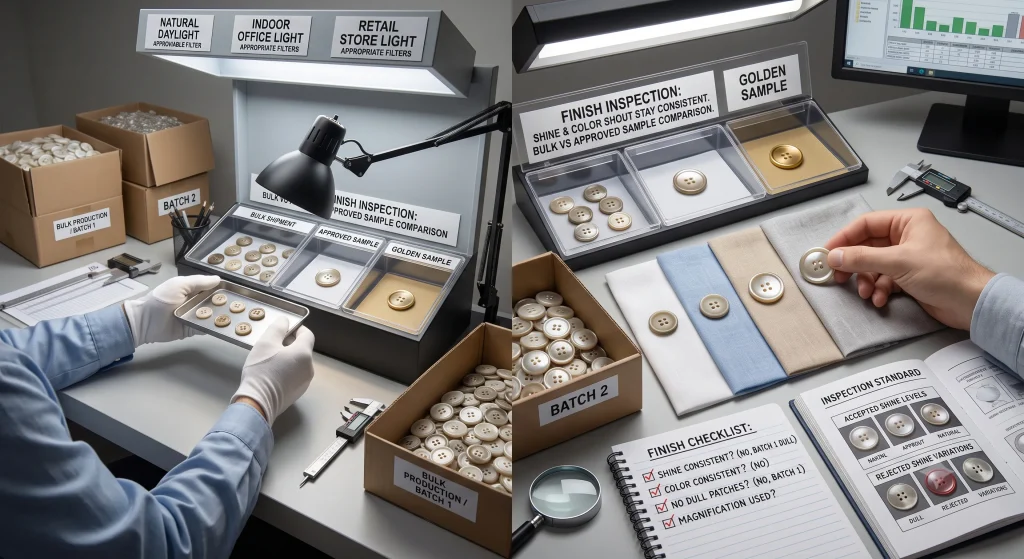
Before shell buttons move into bulk production, buyers should not approve them only by appearance. A button sample may look good on the table, but it may not perform well on the sewing line. Once production starts, small issues such as inconsistent size, rough holes, chipped edges, uneven thickness or finish variation can slow down the whole garment process.
From the perspective of a Button Quality Inspector, shell button quality check should be done carefully before bulk order approval. Checking the right details early helps reduce sewing problems, avoid rejected goods and keep the final garment quality more stable.
Why shell buttons should be checked before bulk production
Shell buttons are made from natural material. Because of that, each button may have slight differences in shine, pattern, color and surface. This is part of the natural beauty of shell buttons, but it is also the reason buyers need a clear inspection standard.
In small orders, a few minor differences may not be serious. But in orders of tens of thousands or hundreds of thousands of garments, small defects can multiply quickly.
For example, if button holes are not drilled evenly, sewing operators may need more time to adjust each button. If the edge is sharp or chipped, the sewing thread may be affected. If the color is not consistent between button bags, the finished garment may look uneven when displayed.
That is why shell button QC is not just about checking whether the buttons look nice. The real goal is to confirm whether the buttons are ready for bulk production.
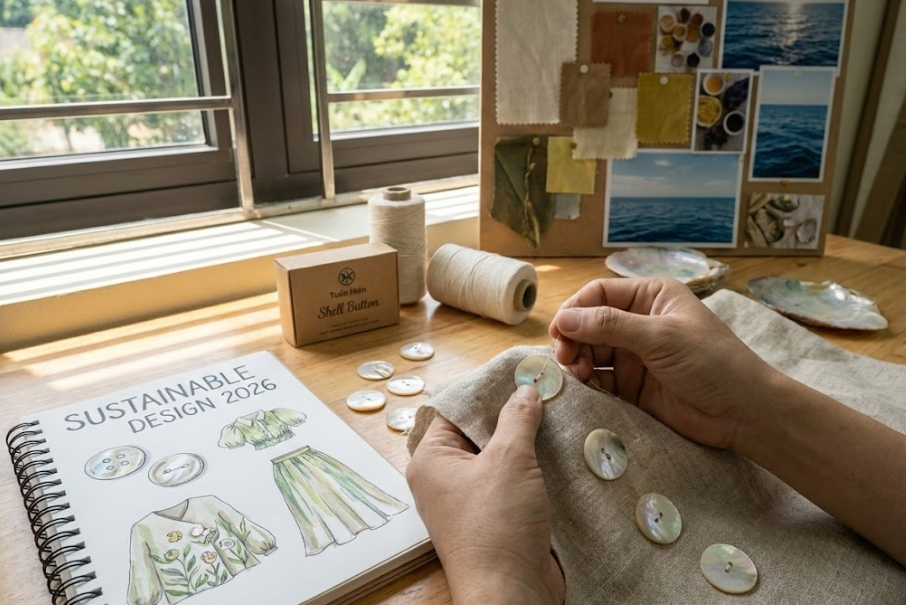
Check the size first
Size is one of the first points to inspect. A small size difference can affect the final look of the garment, especially on shirts, dress shirts, uniforms or knitwear where the button placket is clearly visible.
For button quality inspection, buyers should check size with a proper ruler, caliper or measuring tool. It should not be judged only by eye. If the order includes several button sizes, each size should be separated before inspection.
One common issue is size mixing in the same bag. When buttons go to the sewing line, operators may not notice it immediately. The problem may only become visible after the garment is finished, and fixing it at that stage takes much more time.
For bulk production buttons, size should be checked against the golden sample or approved sample. If there is an acceptable tolerance, both buyer and supplier should agree on it before production.
Check thickness because button feel depends on it
Thickness directly affects the way a button feels in use. A button may look beautiful, but if it is too thin, it can feel weak. On the other hand, if it is too thick, the shirt may be difficult to fasten or the garment may feel heavier than needed.
For premium shirts, thickness should be solid enough for the wearer to feel quality when buttoning the shirt. For uniforms or garments used frequently, thickness is also related to durability. For knitwear or soft fabrics, thickness needs to be balanced so the garment does not feel stiff.
When checking thickness, buyers should not measure only a few pieces and assume the whole lot is acceptable. Samples should be taken from different bags, cartons or batches. If thickness varies too much, the finished garment may lack consistency.
A practical point: thickness does not only affect the hand feel of the button. It also affects sewing performance, button height on the fabric and ease of fastening during use.
Check the holes: they must be clean and correctly positioned
Hole position is one of the most important points in shell button QC. If the holes are off-position, uneven or have rough edges, they can directly affect sewing speed and thread durability.
When checking holes, buyers should pay attention to three things: hole position, hole cleanliness and the spacing between holes. For 2-hole or 4-hole buttons, balance is easy to notice once the button is sewn onto the garment.
If the drilled holes still have burrs or sharp edges, the sewing thread may rub more during use. For products that need frequent washing, such as uniform shirts or casual shirts, this should not be ignored.
A good shell button should not only look clean on the front. The holes also need to be clean, neat and stable enough for sewing production.
Check the edge: no chips, no sharp feeling
Edge quality affects both appearance and wearing comfort. If the button edge is chipped, the garment looks less refined. If the edge is too sharp, the button may feel uncomfortable to touch or may affect the sewing thread.
For shell buttons, chipped edges can happen during production, polishing, packing or transportation. That is why buyers should take samples from different positions inside the carton, not only from the top layer.
A small edge defect may not be obvious at first glance. But when the button is sewn onto a white shirt or light-colored garment, it can become more visible. For dress shirts or premium apparel, the button edge should be smooth and clean.
If the order requires a higher standard, buyers should clearly define which edge defects are acceptable and which should be rejected.
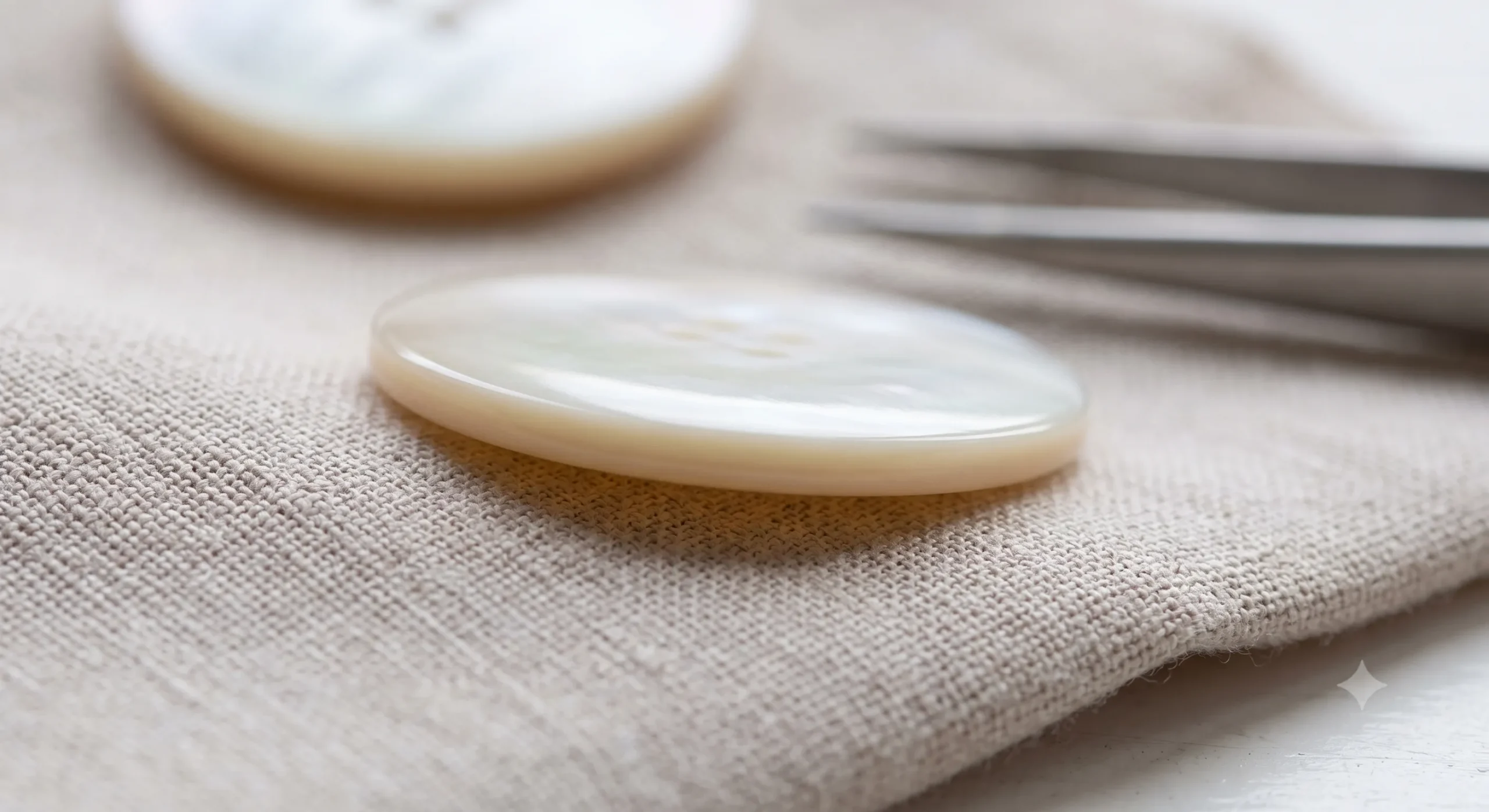
Check the surface: natural variation is acceptable, obvious defects are not
Shell buttons have natural surfaces, so buyers should not expect every button to look exactly the same like plastic buttons. However, natural variation does not mean every defect should be accepted.
When checking the surface, buyers should look for cracks, dents, dark spots that are too obvious, scratches, chipped surfaces or color areas that differ too much from the approved standard. For premium products, the button surface should be cleaner because customers often inspect the garment more closely.
Some natural patterns are acceptable if they still look harmonious overall. But if one button has a defect that stands out too much from the others, it can draw attention once sewn into the button placket.
A good inspection method is to place several buttons next to each other, not only check each button separately. When buttons are sewn on a garment, customers usually see them as a group.
Check the finish: shine and color should stay consistent
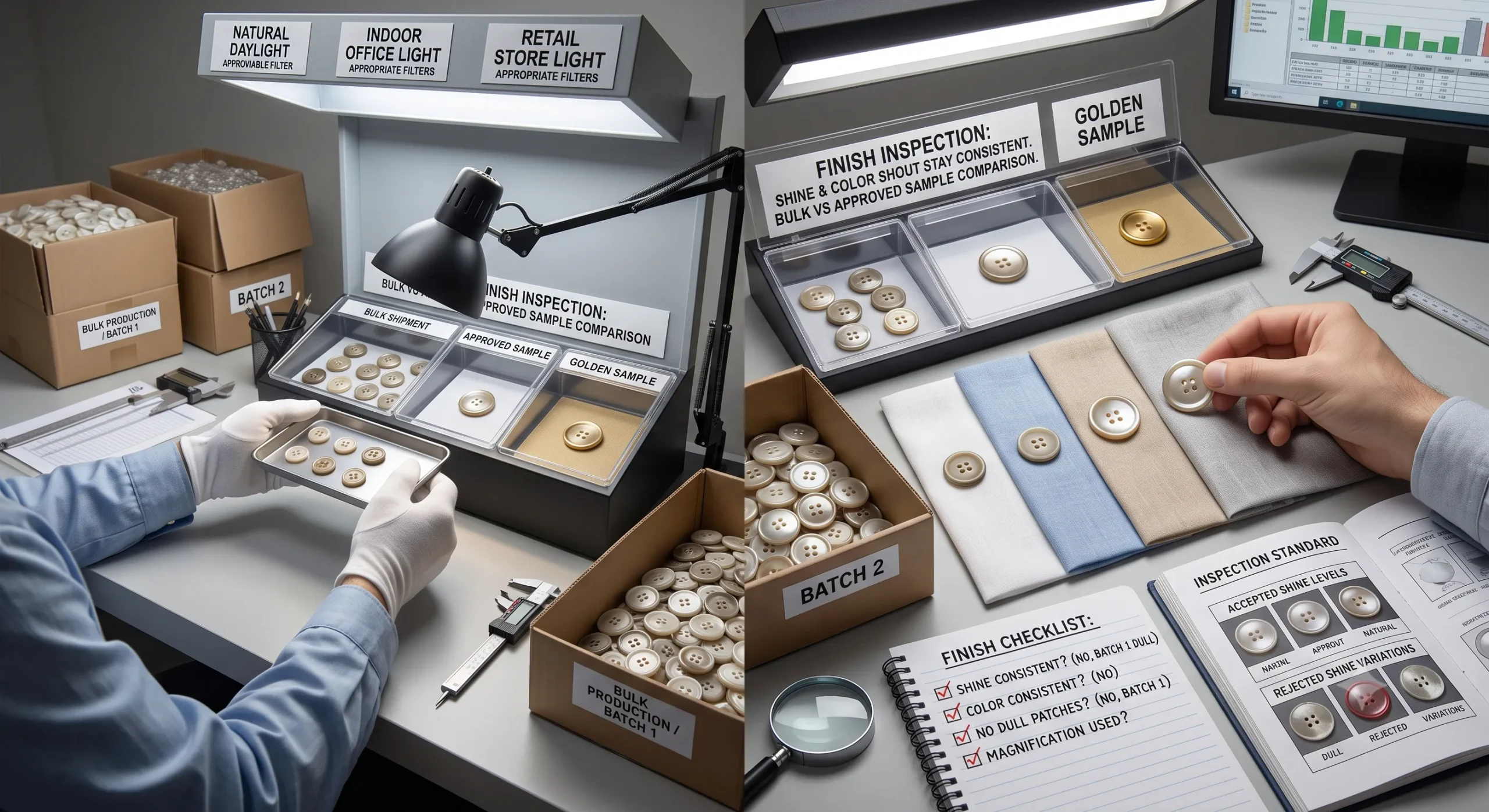
Finish affects whether the button looks clean, bright, matte or more natural. But finish is also one of the areas where bulk goods can differ from the approved sample if not checked carefully.
An approved sample may have a beautiful shine, but in bulk production, the finish may look slightly dull, too shiny or inconsistent between batches. On shirts, especially white, light blue, beige or light grey fabrics, finish variation can be easy to notice.
Buyers should check finish under different lighting conditions: natural light, indoor light and, if needed, lighting similar to retail stores. A button that looks acceptable in an office may look different when placed on real fabric.
For large orders, finish consistency should be clearly written into the inspection standard. If the requirement is only “same as sample” without a clear golden sample, evaluation later can become difficult.
Golden sample: the most important reference point
Before bulk production starts, buyers should approve a golden sample. This becomes the standard reference for the production lot.
A golden sample should clearly show size, thickness, finish, color, surface, edge and hole quality. During bulk inspection, the inspector can compare production buttons directly against the golden sample.
Without a golden sample, each side may judge quality based on personal feeling. The supplier may believe the goods are acceptable, while the buyer may feel they are not close enough to the approved sample. This can waste a lot of time, especially after production is already completed.
For repeat orders, the golden sample is even more important. It helps check whether the next batch stays close to the first approved standard.
Pre-production check: inspect before producing the full order
Before running the full bulk quantity, buyers should request a pre-production sample or a small first production lot. This step helps catch problems early.
If the first lot has issues with thickness, finish or hole position, the supplier still has time to adjust before producing the full quantity. If this step is skipped, the same problem can spread across the entire bulk order.
A pre-production check does not need to be complicated, but it needs to be practical. Check the points that affect production: correct size, clean holes, chipped edges, finish matching the sample and packaging control.
This is a small step, but it can reduce a lot of risk.
Packaging should also be part of shell button quality check
Many buyers inspect the buttons carefully but forget to check packaging. For shell buttons, poor packaging can cause scratches, chipped edges or size mixing during transportation.
Packaging should be clearly separated by size, color, item code or order. Bags, boxes and cartons should include clear information so the factory can receive stock and distribute buttons to the sewing line easily.
If the order includes several similar sizes, packaging becomes even more important. A small amount of size mixing can slow down the sewing line or cause garment defects.
For bulk production buttons, packaging is not just the final step. It is part of order quality.
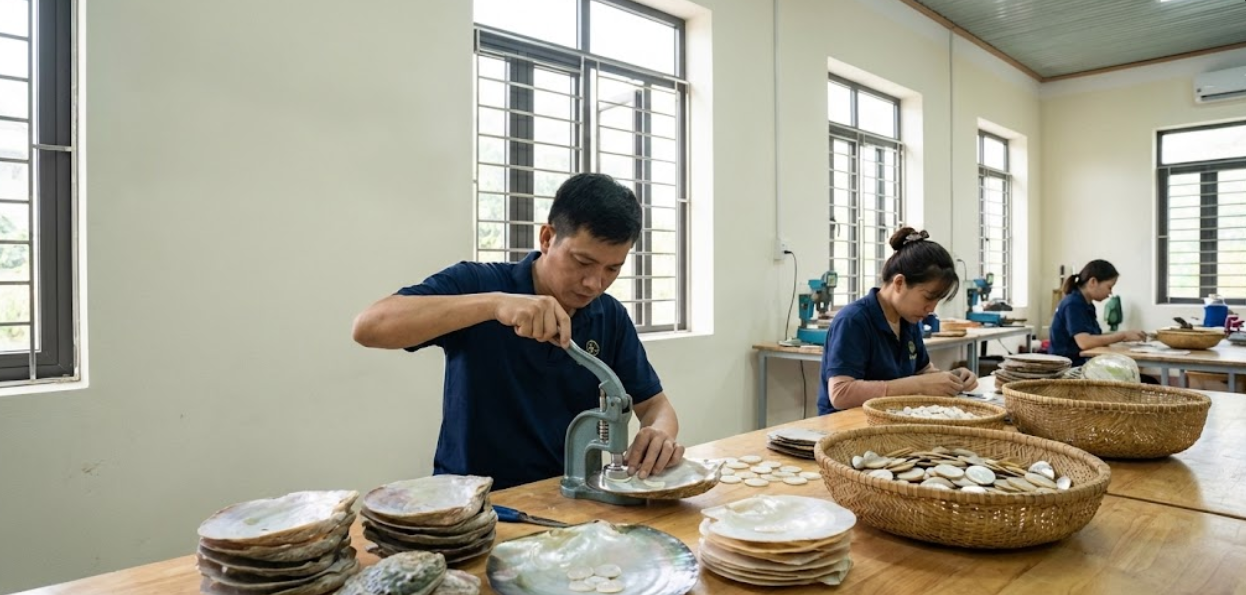
Common defects found during shell button inspection
In real inspection work, some issues appear quite often. Size mixing between bags. Uneven thickness. Off-position or rough holes. Slightly chipped edges. Small surface cracks. Finish that does not match the approved sample. Color variation between batches.
Not every defect means the whole order should be rejected. The important point is that buyers and suppliers should agree on the acceptable level before production.
For premium products, the standard should be stricter. For casual or uniform products, the standard may be more practical, but it still needs to ensure sewing performance and usability.
Good inspection is not about finding as many defects as possible. Good inspection is about finding the defects that can affect the final product.
How Tuan Hien Shell Button supports customers with button quality control
For customers who need shell button quality check before bulk production, preparing a clear inspection standard is very important. A shell button order should include information about material, size, thickness, finish, quantity, packaging, golden sample and QC requirements.
Tuan Hien Shell Button can support customers with sample selection, specification confirmation, sample development, golden sample approval, bulk production preparation and shell button quality control based on real order requirements.
If customers need shell buttons for shirts, uniforms, knitwear, premium apparel or repeat orders, checking QC from the beginning helps make production more stable.
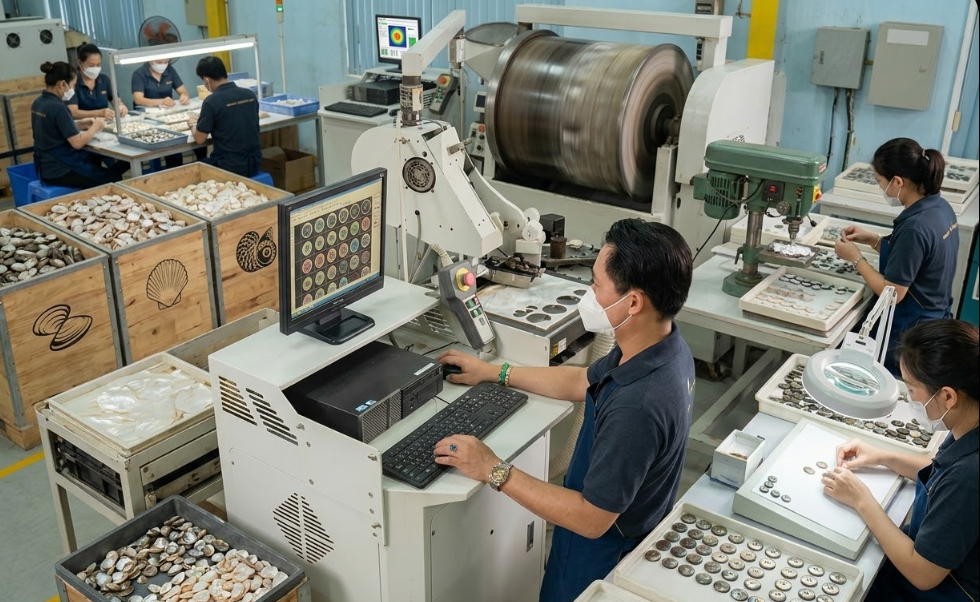
Conclusion: checking buttons carefully before bulk saves time later
Shell button quality check before bulk production should not stop at “the sample looks nice.” Buyers need to check size, thickness, holes, edges, surface, finish, packaging and golden sample matching.
A qualified shell button does not need to look mechanically perfect. But it needs to follow the approved specification, be easy to sew, avoid production problems and stay consistent in large quantities.
Customers who need advice on shell button QC, bulk production buttons or shell button quality inspection before ordering can contact Tuan Hien Shell Button via HOTLINE: +84 283 9851258 for support based on real order needs.


