

When an apparel brand decides to completely remove plastic materials from a collection, the biggest pressure doesn’t fall on the design team. It falls heavily on the Sourcing and Compliance departments.
Switching to natural shell buttons sounds like a perfect move. But behind that beautiful nacre surface lies a series of tough questions from auditing organizations: Where do the shells come from? Does this violate marine environmental protection laws? Is the blank grinding process toxic?
Replacing plastic with shell. The decision is easy. The execution is risky.
The Traceability Nightmare
Many buyers fear that using shell buttons will hit the barrier of wildlife protection. This is a common misunderstanding.
In the real supply chain, high-quality blanks like MOP (Mother of Pearl) or Trocas are not overexploited. They are byproducts of the food or pearl farming industries. Standardized factories source shells from licensed farms or harvesting areas. Instead of being discarded as bio-waste, the shells are recycled, cut into blanks, and polished into buttons.
That is why sustainable apparel buttons made from 100% natural shell are biodegradable, fully satisfying the strictest ESG reports in the EU or US. No CITES violations. No microplastics.
The Real Trouble Lies in the Factory’s Buttonhole Machine
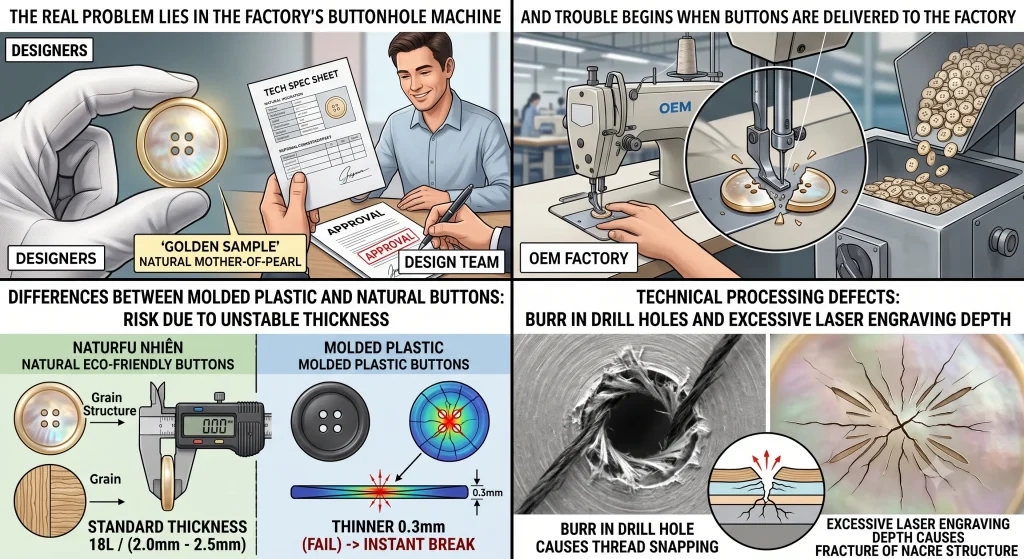
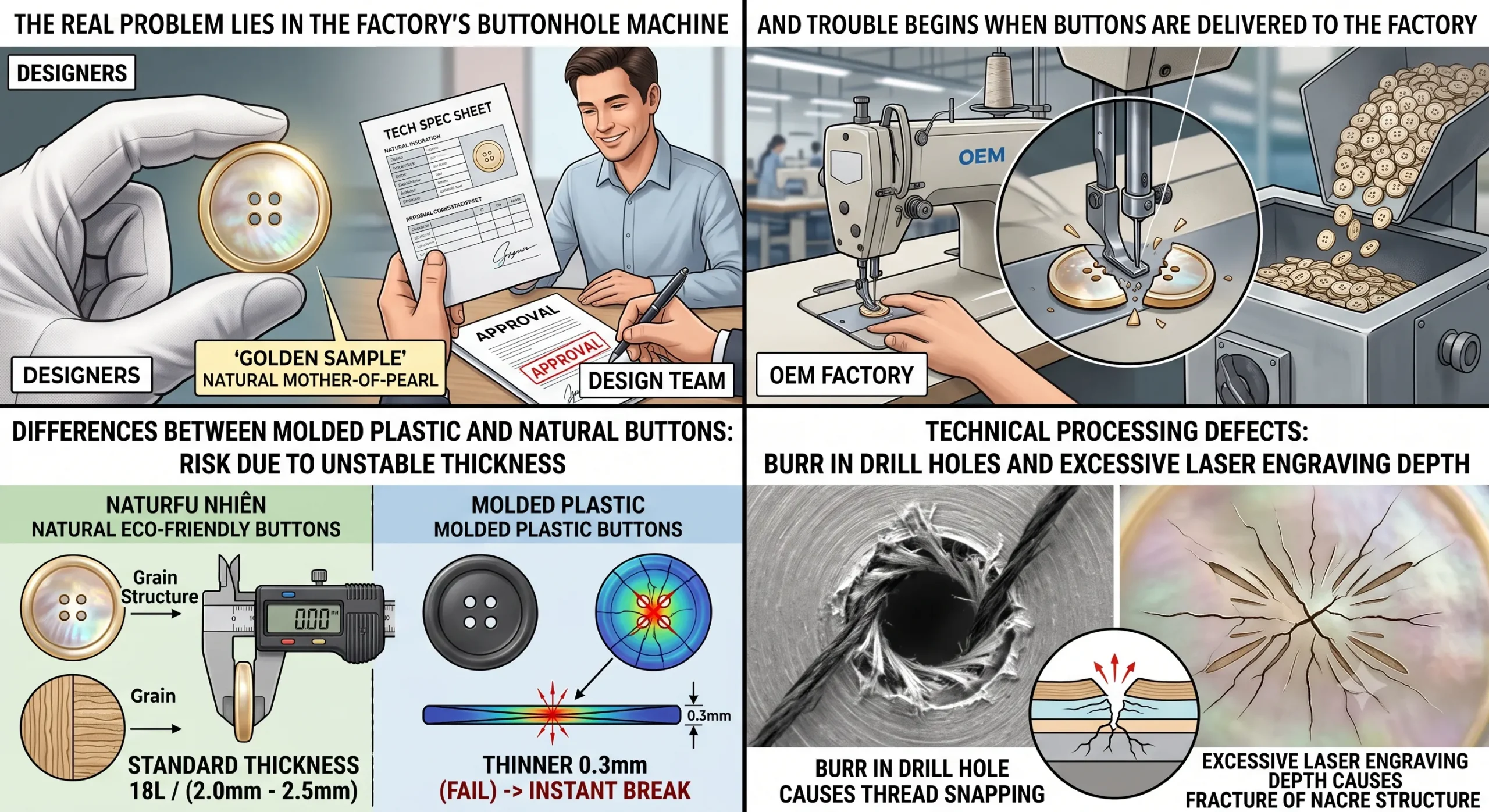
You hold a beautiful golden sample in your hand. The client approves it immediately. But the real trouble begins when this batch of buttons is poured into the industrial sewing machines at the OEM factory.
The needle strikes down. The button cracks in half.
Unlike molded plastic buttons where thousands look exactly the same, natural eco friendly buttons have varying grain structures. If the button factory does not strictly control thickness tolerance, the risk of breakage during sewing is extremely high. An 18L (ligne) button for a premium shirt must have a stable thickness of 2.0mm – 2.5mm depending on the tech spec. Grind it just 0.3mm thinner to save on blank costs, and the button will shatter instantly under the pressure of the buttonhole machine.
Not to mention the technical machining details. Burrs in the drill holes? The sewing thread will fray and snap after a few washes. Going too deep on the laser etching depth? The nacre surface structure is compromised, leading to cracks radiating from the center.
Batch Consistency in the Natural World
With plastic, you hand over a Pantone code, and the factory matches it 100%. With natural shell buttons, no two buttons are exactly alike.
From a Compliance and QC perspective, this demands a completely different set of acceptance standards. You cannot force a factory to deliver 100,000 identical pure white shell buttons. You must work with the supplier to clearly define: what percentage of yellow tint, black veins, or natural spots on the back is considered an acceptable range?
Without locking down the color tolerance upfront, the bulk order will get stuck at the QC stage, delaying the entire FOB shipment process of the garment factory.
Export Packaging: The Death Trap of Bulk Orders
A button factory in Vietnam might be great at cutting and polishing blanks. But pack them wrong, and everything goes down the drain.
Shell is very hard but prone to chipping and surface scratching if continuously bumped together. During a bumpy 30-day ocean freight transit, if the buttons are simply dumped into thin plastic bags and stuffed into poor-quality cartons, the defect rate can reach 5-7%. Sorting by size, adding moisture-proof paper, counting exact quantities per small bag, and using export-standard master cartons are mandatory requirements.
The Next Step for B2B Buyers
Don’t just send an email asking “What’s your MOQ and price?”. To safely integrate this natural material into mass production, you need to send a technical RFQ.
Prepare a Spec Sheet that includes:
- Specific material (White MOP, Black MOP, Trocas, Agoya…)
- Size (Ligne/mm) and Thickness requirement (mm)
- Acceptable tolerance limit
- Finish type (Polished, Matte, Laser Engraved)
- Export packaging requirements.
Send this spec sheet directly to our technical team at the Tuan Hien Shell Button Landing Page. We don’t just quote prices; we audit technical risks for you before we start cutting the bulk blanks.


