


When a buyer wants to order shell buttons in bulk, the first questions are usually: “How much does it cost?” or “What is the lead time?” These are normal questions in any sourcing process. But in reality, if you want a supplier to quote quickly and accurately, asking for the price alone is not enough.
The reason is simple: a shell button does not have one fixed price. The cost and production time can change depending on material, size, thickness, holes, finish, quantity, packaging, and the level of OEM/custom work required. Even if two buttons are both made from shell, the quotation can be very different if the material, thickness, finish, or logo requirement changes.
That is why a clear RFQ is so important.
RFQ stands for Request for Quotation. It is the information a buyer sends to a supplier so the supplier can understand the requirement, check production feasibility, calculate pricing, and confirm lead time.
In simple terms, the clearer your RFQ is, the faster the supplier can respond. The more vague your RFQ is, the more questions the supplier has to ask. And every follow-up question takes more time. For B2B orders, especially bulk orders or OEM/custom projects, a slow quotation can also delay sampling, sample approval, and production planning.
Why an Incomplete RFQ Slows Down the Quotation
In many cases, quotations are not delayed because the supplier does not want to respond. They are delayed because the first message does not contain enough information.
For example, if a buyer simply says, “We need shell buttons for shirts,” the supplier cannot quote accurately yet. They still need to know the material: MOP, Trocas, Agoya, River shell, or Abalone. They also need to know the size, thickness, number of holes, finish, quantity, packaging, destination country, Incoterms, and delivery deadline.
If even a few of these details are missing, the supplier has to ask again. If the buyer replies late, or the answer is still incomplete, the quotation process becomes longer. Something that could have been handled in one day may take several days simply because the RFQ was not clear enough from the beginning.
That is why B2B buyers should treat the RFQ as the first step of a successful order, not just as a short message asking for a price.
A Good RFQ Starts with the Material
For shell buttons, material should be clarified first. Each material has different characteristics, pricing, stability, and application.
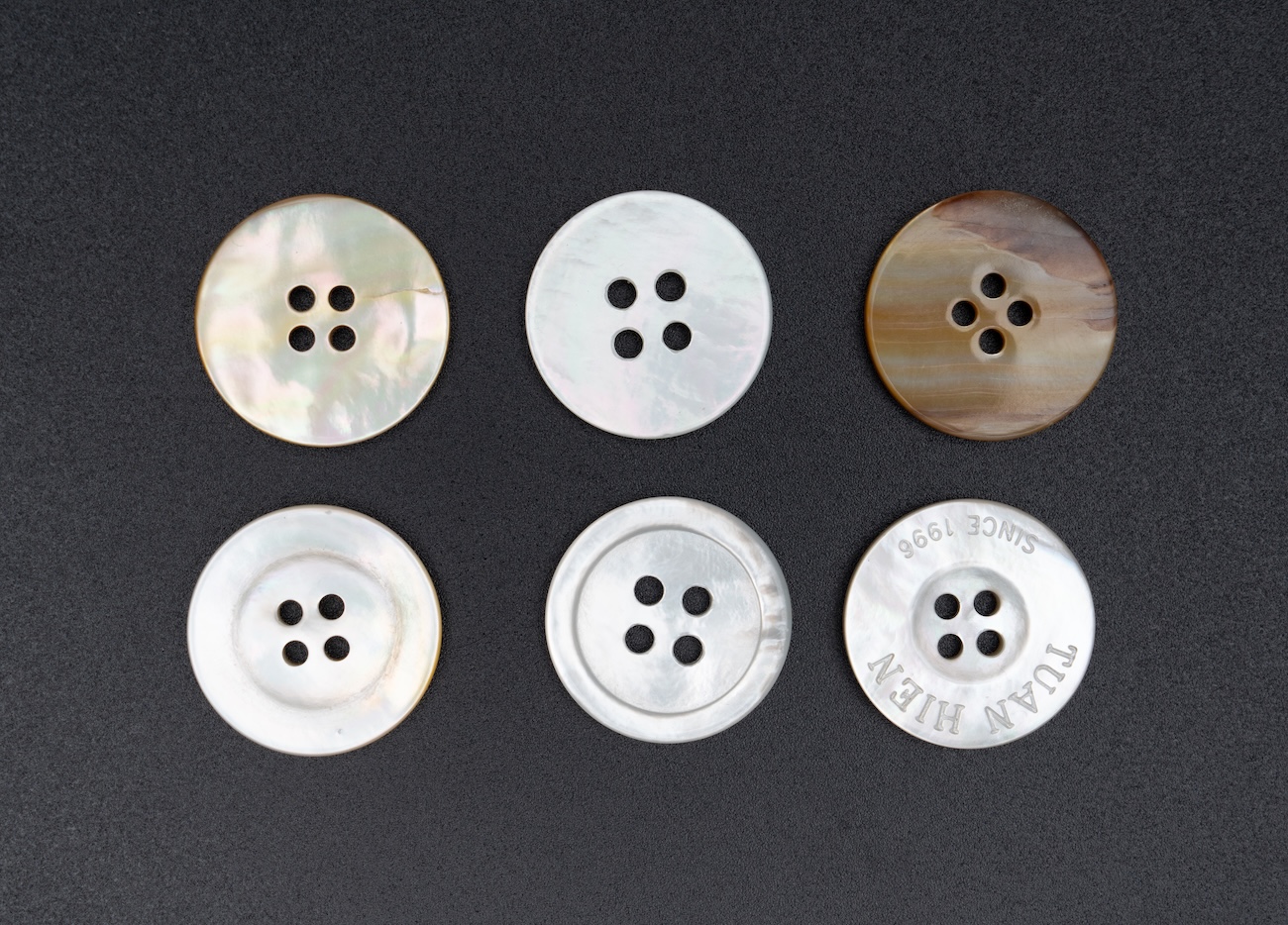
MOP – Mother of Pearl is often suitable for premium shirts, dress shirts, and luxury apparel because it has a natural pearlescent shine and a refined look. Trocas is more suitable for bulk production, shirts, knitwear, and orders that require stable quality. Agoya can work well for fashion products that need a lighter and more distinctive appearance. River shell is often used for casual shirts or lifestyle apparel, while Abalone is suitable for more expressive designs that need a statement effect.
If the buyer is not sure which material to choose, the best way is to explain the product application. For example, will the buttons be used for shirts, knitwear, cardigans, luxury apparel, or uniforms? Once the supplier understands the actual product, they can recommend a more suitable material instead of quoting blindly.
Size and Thickness Should Be Clear from the Beginning
After material, the buyer should clearly provide the size. Size can be stated in mm or Ligne, depending on the system the brand uses. This detail is important because button size affects pricing, usability, and the overall balance of the garment.
If the buyer only writes “small size” or “medium size,” the supplier cannot know exactly what is needed. An 11mm, 12mm, or 14mm button can create a very different look and feel when placed on a shirt. For shirts, the size should be easy to fasten and balanced with the placket. For knitwear or cardigans, the button may need to be larger to match the fabric thickness.
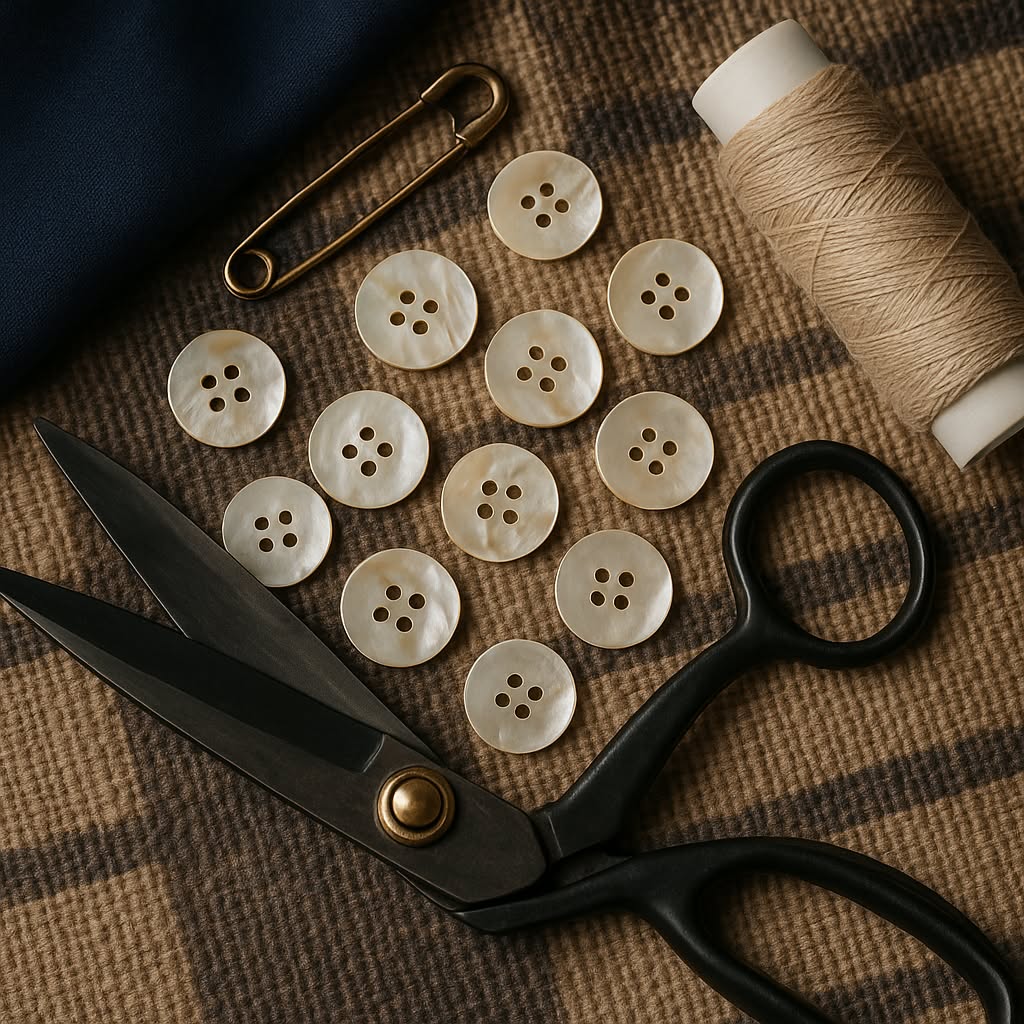
Besides size, thickness is also important. Thickness affects durability, hand feel, and the perceived value of the button. A button that is too thin may chip more easily or feel less premium. A button that is too thick may be stronger, but on lightweight fabric it can make the garment feel heavy or difficult to button.
For that reason, the RFQ should include the desired thickness and tolerance if available. If the buyer does not have exact specifications, sending an old sample or reference photo can help the supplier suggest a suitable thickness.
Holes and Finish Should Not Be Ignored
The number of holes may seem like a small detail, but it affects sewing, strength, and the final look of the garment. The buyer should clearly state whether the button needs 2 holes, 4 holes, or a custom hole design. If the brand already has a standard, keeping the same hole style across orders helps maintain consistency for future reorders.
Finish is also an important part of the RFQ. With shell buttons, finish strongly affects both the surface feel and visual impression. Matte finish feels softer and more natural, which works well for minimalist or casual products. Glossy finish creates a cleaner and brighter look. Polished finish is often suitable for premium shirts or luxury apparel because it catches light beautifully. If the buyer needs a specific color, they may request a dyed finish or another special finish.
Words like “beautiful,” “premium,” or “natural” may not be clear enough for production. It is better to send reference photos or a previous sample. This gives the supplier a clearer standard to follow.
Quantity and Reorder Plans Help Make the Quote More Accurate
The supplier needs to know the total quantity. But if the order includes multiple sizes, the total quantity alone is still not enough. The buyer should provide a quantity breakdown by size so the supplier can calculate pricing and plan material more accurately.
For example, if the order includes 12mm, 14mm, and 16mm buttons, the RFQ should state how many pieces are needed for each size. This helps the supplier check production feasibility, prepare materials, and confirm a more realistic lead time.
If the buyer has a reorder plan by month or by season, that information is also valuable. When the supplier knows that this is not a one-time order, they can advise on MOQ, lead time, and production planning in a more stable way for future batches.
OEM/Custom Orders Need Even More Detail
If the order includes OEM/custom requirements, the buyer should mention them from the beginning. Requirements such as logo engraving, laser marking, custom color, special finish, custom pattern, branding marks, or custom packaging can all affect pricing and lead time.
For example, if logo engraving is required, the supplier needs to check the logo file, engraving size, position, and how clearly the logo can appear on the shell surface. If the logo is too small or too thin, it may need to be adjusted so it remains clean and visible after production. If the buyer requests custom color or special finish, the supplier may need to test a sample before confirming bulk production.
That is why OEM/custom RFQs should be as detailed as possible. If the logo file, reference image, or custom requirement is missing, the supplier cannot confirm feasibility quickly and will need to ask more questions.
Packaging and Incoterms Also Affect the Quote
Many buyers focus on the product but forget to clarify packaging. For shell buttons, packaging should not be treated as a minor detail. Since shell is a natural material, buttons need protection from chipping, scratching, and impact during shipping.
The buyer should explain whether the buttons need to be packed in bags, boxes, or another format. If anti-scratch protection, anti-chip protection, private labels, or export packaging standards are required, these details should be included in the RFQ from the start.
The buyer should also state the destination country and preferred Incoterms, such as FOB, CIF, or DDP. This helps the supplier understand how much logistics and export documentation support is needed.
If the buyer is not sure which Incoterm to choose, they can still provide the destination country and ask the supplier for a suitable option. The important point is not to leave the delivery requirement too vague, because it can affect the total cost and order timeline.
The Deadline Should Be Clear but Realistic
The buyer should clearly state the required delivery deadline. At the same time, the deadline should match the actual complexity of the order. If the order uses a standard design, the lead time may be shorter. But if the order requires logo engraving, special finish, custom packaging, or sample approval, more time will be needed.
A useful sentence to include in the RFQ is:
“Please confirm lead time for sampling and bulk production.”
This helps the supplier separate the sample timeline from the bulk production timeline. As a result, the buyer can plan better, especially when the button order is connected to garment production, export schedules, or brand deadlines.
What a Clear RFQ Gives the Buyer
A good RFQ does more than help the buyer get a faster price.
First, it helps the supplier provide a more accurate quotation. The supplier does not have to guess the material, size, thickness, or finish. This reduces the risk of incorrect pricing or price changes after the details are clarified.
Second, it helps the supplier confirm a more realistic lead time. The supplier can check sampling, production, QC, packaging, and shipping requirements before giving a timeline.
Third, it reduces production risks. When the buyer and supplier understand each other clearly from the beginning, the chance of wrong specifications, wrong finish, or wrong packaging becomes lower.
Finally, it saves time for both sides. The buyer does not need to answer too many follow-up emails, and the supplier can process the RFQ more efficiently.
In short, the clearer the RFQ, the smoother the process.
How Tuan Hien Supports Buyers with RFQ Preparation
For B2B shell button orders, Tuan Hien can help buyers clarify important details such as material, size, thickness, finish, MOQ, lead time, OEM/custom requirements, sample approval, QC standards, and packaging.
If the buyer is not sure whether to choose MOP or Trocas, Tuan Hien can advise based on the actual product. If the buyer needs buttons for shirts, knitwear, luxury apparel, or bulk production, a clear RFQ will help Tuan Hien respond faster and provide more relevant recommendations.
The buyer does not need to have everything perfect from the beginning. But the clearer the information, the easier it is for the supplier to help. An RFQ that includes material, size, thickness, quantity, finish, packaging, and deadline will always work better than a general message asking, “How much is it?”

Conclusion
A good RFQ does not have to be complicated. It only needs to be clear, complete, and focused on the right details.
For shell buttons, buyers should prepare information about material, size, thickness, holes, finish, quantity, OEM/custom requirements, packaging, destination, Incoterms, and deadline. These details help the supplier quote faster, confirm a more realistic lead time, and reduce risks before bulk production begins.
So if you want a faster quotation, do not only ask, “What is the price?” Send a clear RFQ.
When you send your RFQ to Tuan Hien with clear information about material, size, thickness, finish, quantity, and deadline, the consultation, quotation, and shell button production process can become faster, more accurate, and more stable.


