

A good shirt is not made only from fine fabric, a clean fit, or neat stitching. Small details, such as buttons, also play an important role in the final look, feel, and quality perception of the garment.
For B2B buyers, choosing shell buttons for shirts should not be based only on color or shine in a photo. A button may look beautiful on its own, but if it does not fit the fabric, size, thickness, finish, or production standard, it can create problems when the order moves into bulk production.
This guide helps garment brands, buying houses, sourcing agents, and OEM apparel factories understand how to choose shell buttons for shirts in a practical way: which material to choose, when to use MOP, when to use Trocas, what to check before sending an RFQ, and how to reduce risks in bulk orders.
Why Shirts Need Carefully Selected Buttons
A shirt has many direct touchpoints with the wearer. People button and unbutton it, touch the collar, adjust the cuffs, and interact with the front placket throughout the day. That means a button is not just decoration. It is part of the wearing experience.
The wrong button can make a shirt look less premium, feel harder to use, chip more easily, or look unbalanced. The right shell button, on the other hand, can make a shirt look cleaner, more refined, and more trustworthy.
For premium shirts, dress shirts, export shirts, and luxury apparel, shell buttons are often preferred because they offer natural beauty, a better hand feel, and a higher perceived value than many standard plastic buttons.
Common Shell Button Materials for Shirts
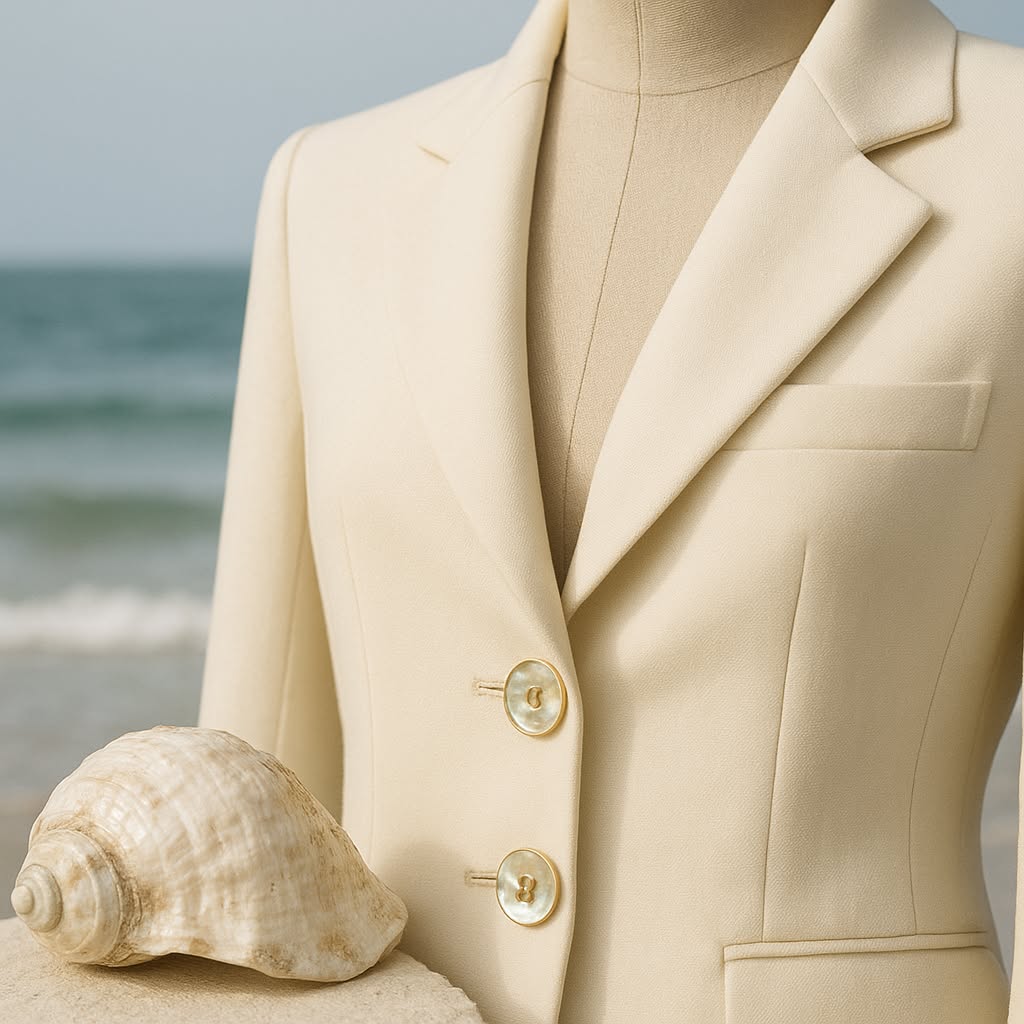
When choosing shell buttons for shirts, buyers often consider materials such as MOP, Trocas, Agoya, River shell, and Abalone. Each material has its own strengths and fits different product segments.
MOP – Mother of Pearl is a strong choice for premium shirts. It has a natural pearlescent shine that feels soft, refined, and elegant. When used on white, light blue, beige, or neutral-colored shirts, MOP can make the garment feel more luxurious without looking too loud. It is suitable for dress shirts, tailoring shirts, premium cotton shirts, and luxury apparel.
Trocas is suitable for orders that need stability, durability, and repeatable production. It has a clean natural surface, good strength, and is often easier to control in bulk production. If the buyer needs large-quantity shirt orders, uniform shirts, casual shirts, or seasonal reorders, Trocas is a practical option.
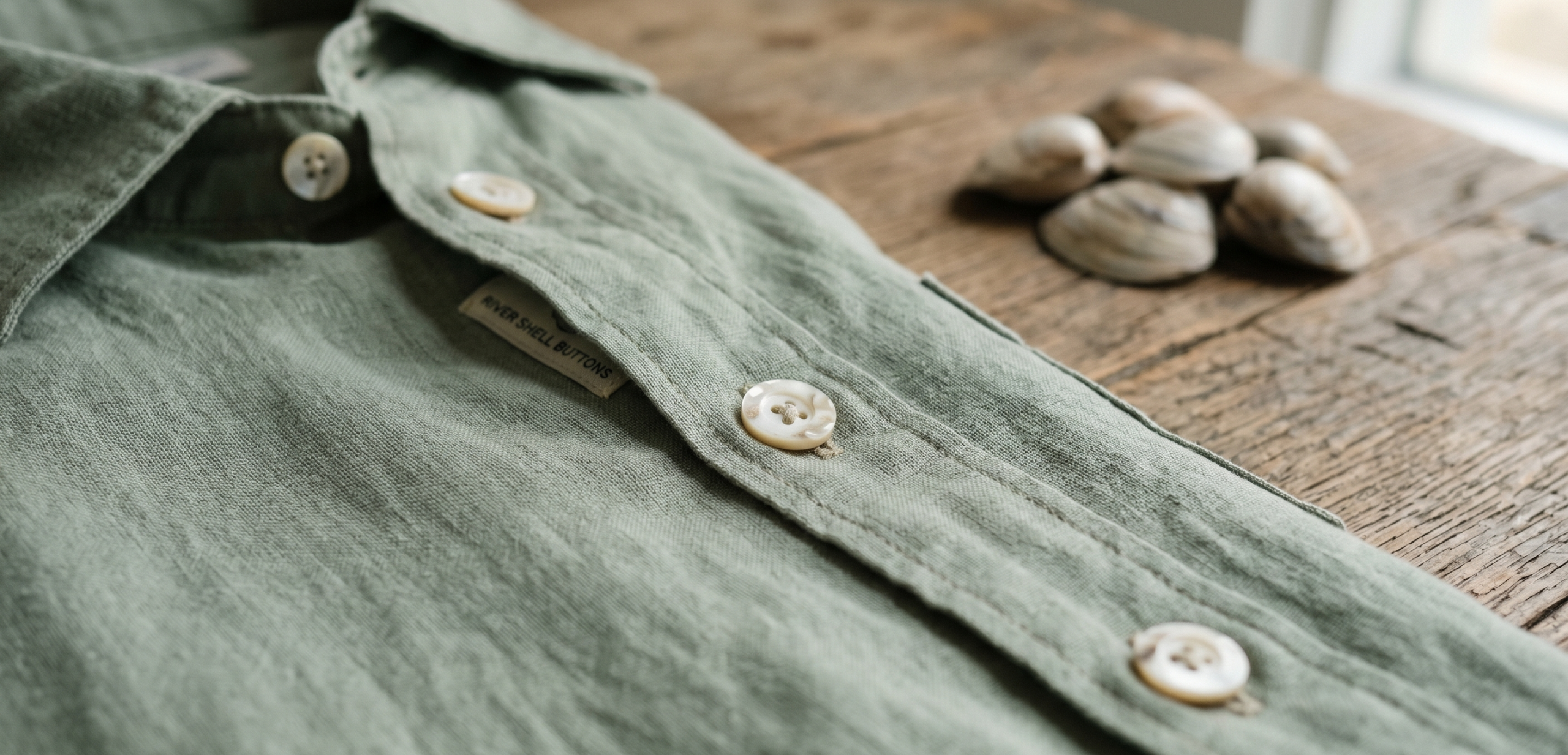
Agoya works well for shirts with a more fashion-oriented feel. It can add a lighter, more refined, and slightly distinctive character while keeping the natural look of shell buttons.
River shell can be a good option for casual shirts or lifestyle shirts where the buyer wants a natural appearance while still balancing cost. It is suitable for products that do not require the deeper pearlescent effect of MOP.
Abalone has stronger color and pattern variation. It is suitable for special designs or statement shirts. However, Abalone usually requires more careful sorting because its natural color and pattern variation can be higher.
MOP or Trocas: Which Is Better for Shirts?
There is no single answer for every order. The right choice depends on product positioning, budget, QC requirements, and production planning.
If you are producing premium shirts, made-to-measure shirts, dress shirts, or products that need a more refined and premium feel, MOP is often the better choice. Its natural shine and elegant surface can increase the perceived value of the shirt.
If you are producing shirts in large quantities, uniform shirts, casual shirts, or products that require stable quality across multiple batches, Trocas is often more practical. Trocas helps buyers control quality more easily, reduces production risk, and supports repeat orders well.
A simple way to decide:
Choose MOP when you want the shirt to feel more premium.
Choose Trocas when you need stability, durability, and bulk production efficiency.
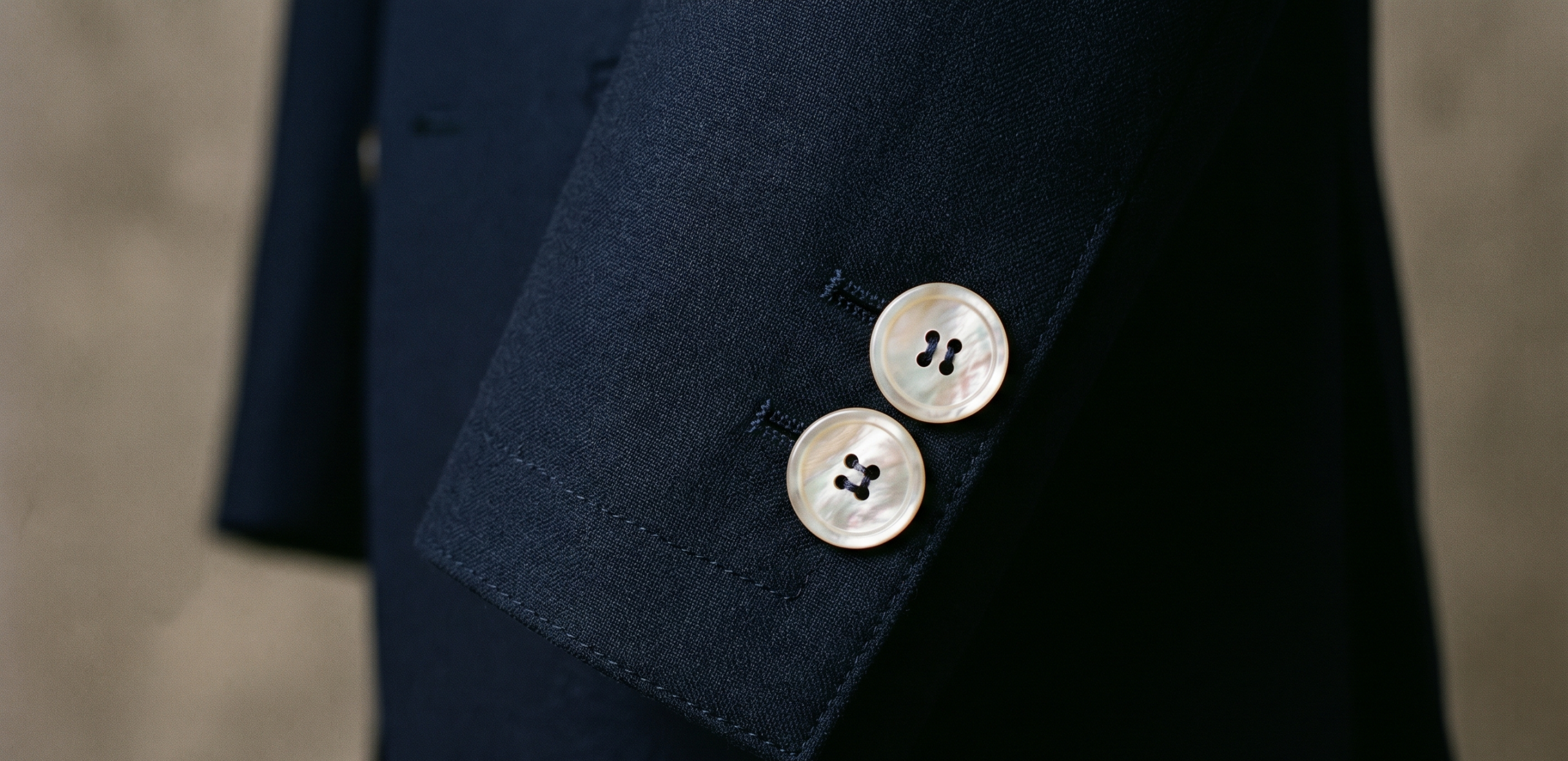
For many brands, the best approach is not to use one material for every product. Premium lines can use MOP. Casual or bulk lines can use Trocas. Special fashion lines may consider Agoya, River shell, or Abalone.
Size: Choosing the Right Button Size for Shirts
Size is one of the first details buyers should define before sending an RFQ. The right button size helps a shirt look balanced and easy to use.
If the button is too small, the shirt may look weak or lack detail. If the button is too large, the shirt may lose elegance, especially for dress shirts or formal shirts.
For men’s shirts, the button size should feel secure, easy to fasten, and balanced with the front placket. For women’s shirts or fashion shirts, the size can be more flexible depending on the design. Cuff buttons should also be checked separately because cuffs often have different requirements from the front placket.
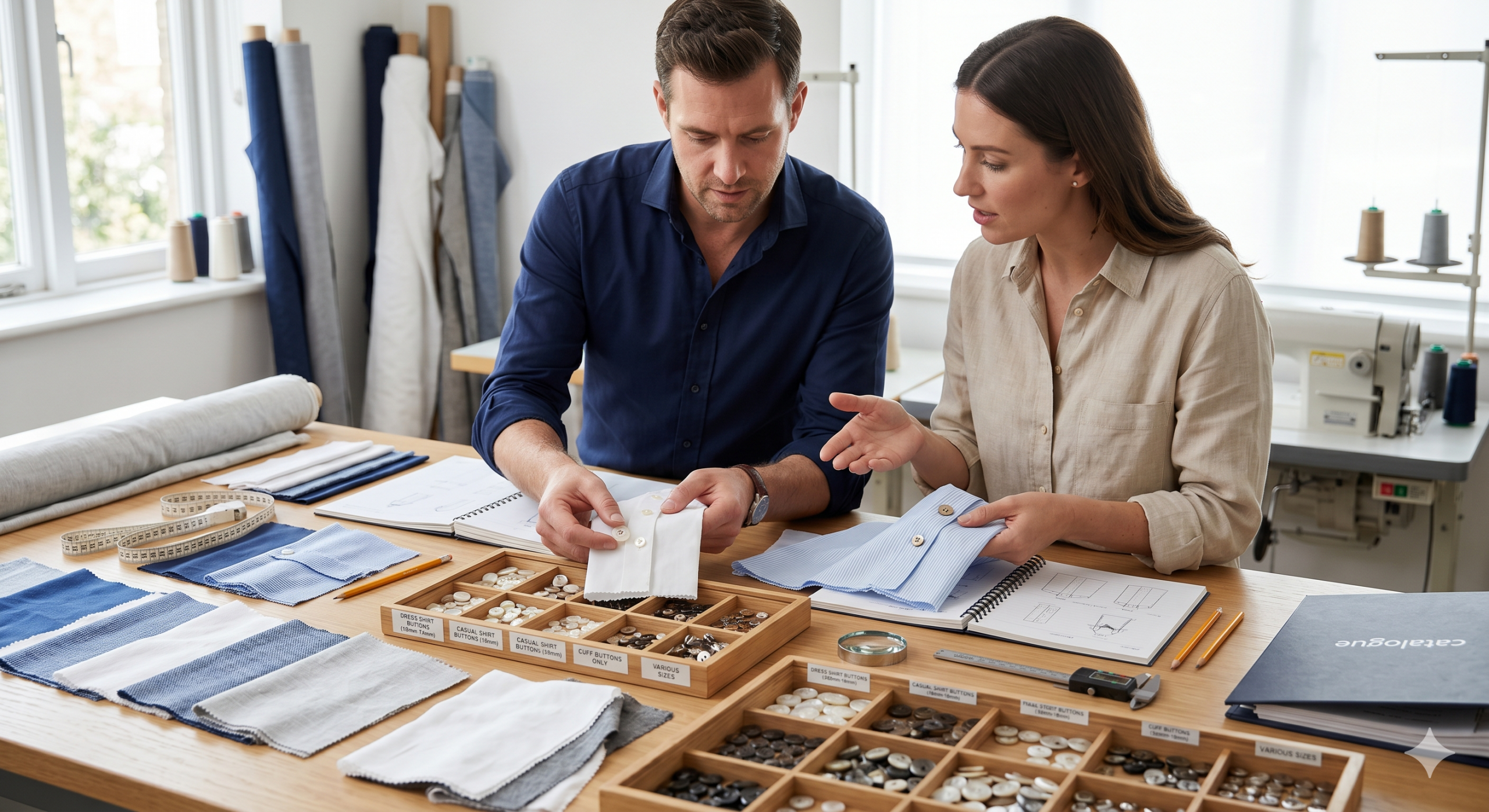
Buyers should not choose button size based only on a catalogue. It is better to test the button on the actual fabric, in the correct shirt color, and in the exact position where it will be used. That is the best way to know whether the button truly fits the product.
Thickness: Why It Affects Feel and Durability
For shell buttons, thickness directly affects hand feel, durability, and the quality perception of the shirt.
A button that is too thin may look light and refined, but if it is too thin, it may chip more easily or feel less premium. A button that is too thick may be stronger, but if it does not match the fabric, it can make the shirt feel heavy, stiff, or harder to button.
For premium shirts, thickness consistency is important. If some buttons are thicker and others are thinner, the user may not notice immediately, but the product will lose a sense of uniformity.
In the RFQ, buyers should clearly mention the desired thickness and tolerance if available. This helps the supplier understand the product standard and avoid using a general specification that may not fit the brand’s needs.
Finish: Matte, Glossy, or Polished?
Finish affects the surface feel and visual impression of the button. For shell buttons for shirts, common finishes include matte, glossy, and polished.
Glossy or polished finish is often suitable for premium shirts, dress shirts, or products that need a clean, bright, and elegant look. This finish helps the button catch light better, especially on white shirts, light blue shirts, and premium cotton fabrics.
Matte finish is suitable for minimalist shirts, casual shirts, or brands that want a more natural and understated feel. Matte finish does not stand out too strongly, but it can create a refined and modern look.
No finish is always better than another. The right finish is the one that fits the fabric, shirt color, and brand positioning.
QC: What Buyers Should Check Before Bulk Orders
For B2B orders, QC should not stop at checking whether the button looks good. Buyers should check the details that affect production and the wearer’s experience.
Important points include: whether the size is consistent, whether the thickness is stable, whether the holes are in the correct position, whether the edges are sharp, whether there are cracks, chips, color defects, finish inconsistency, or packaging risks during shipping.
For MOP, buyers should pay extra attention to the consistency of pearlescent shine, color tone, and surface character. For Trocas, buyers should check strength, edge finishing, hole quality, and batch-to-batch stability.
If the order includes logo engraving or laser marking, buyers should approve the sample carefully to make sure the logo is clear, correctly positioned, and does not weaken the button structure.
What Buyers Should Prepare Before Sending an RFQ
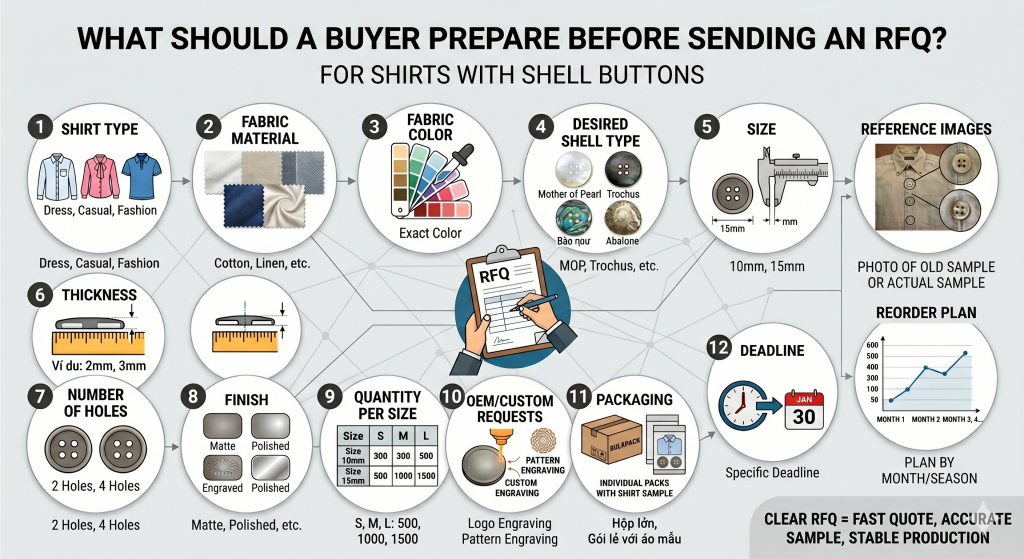
A clear RFQ helps the supplier quote faster and more accurately. For shell buttons used on shirts, buyers should prepare the following information: shirt type, fabric material, fabric color, preferred shell material, size, thickness, number of holes, finish, quantity by size, OEM/custom requirements, packaging, deadline, and reference images.
If there is an old sample, send photos or the physical sample. If repeat orders are expected, share the monthly or seasonal plan with the supplier.
A vague RFQ creates many rounds of communication. A clear RFQ helps the supplier quote faster, produce samples more accurately, and plan production more smoothly.
Why Samples Should Be Tested on the Actual Shirt
A button can look beautiful on a table but still fail to fit the actual shirt. That is why buyers should test samples on the real garment before approving a bulk order.
When testing, check whether the button is balanced with the fabric, easy to fasten, not too heavy for the shirt, visually suitable in color and shine, and aligned with the brand’s positioning.
This is why the golden sample is important. Once the buyer approves the golden sample, the supplier can use it as the standard for bulk production and future reorders.
How Tuan Hien Supports Buyers Choosing Shell Buttons for Shirts
For B2B buyers, choosing shell buttons is not only about finding a beautiful button. It is a decision connected to design, production, QC, packaging, and future reorder stability.
Tuan Hien can support buyers in defining material, size, thickness, finish, OEM/custom requirements, sample approval, QC standards, and packaging for shell button orders.
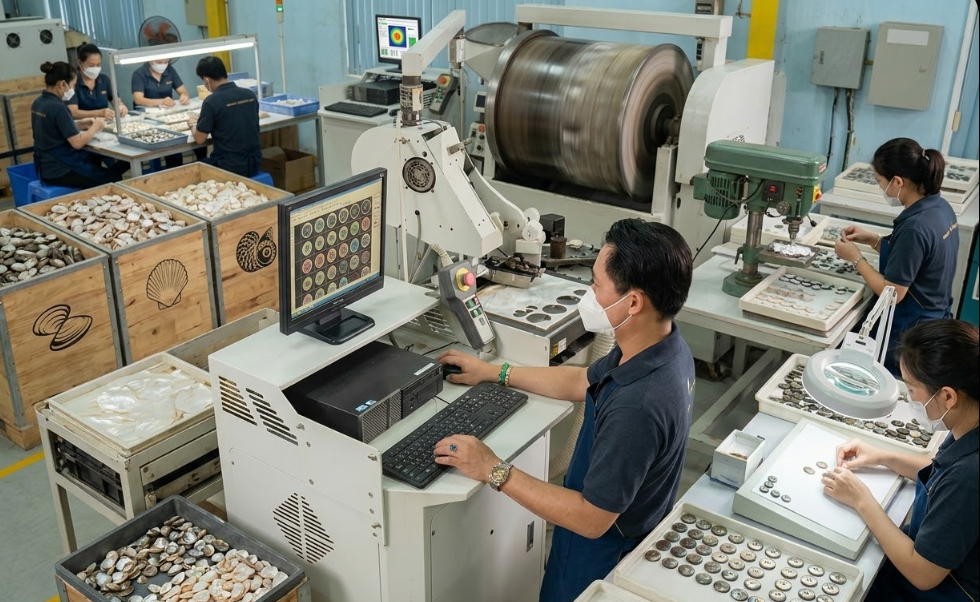
If the buyer needs buttons for premium shirts, Tuan Hien can advise on suitable MOP options in terms of size, thickness, and finish. If the buyer needs buttons for casual shirts, uniform shirts, or bulk orders, Trocas may be the more stable choice.
When buyers send a clear RFQ, Tuan Hien can respond faster, provide more accurate recommendations, and help the order move into production with fewer risks.
Conclusion
Choosing shell buttons for shirts should not be based only on color or shine. Buyers need to look at the full picture: material, size, thickness, finish, QC, and production goals.
MOP is suitable for premium shirts that need a refined feel and higher perceived value.
Trocas is suitable for shirts that need durability, stability, and bulk production efficiency.
Agoya, River shell, and Abalone may suit more special product lines, depending on design and market positioning.
The right button does more than make a shirt look better. It makes the product feel more complete, easier to produce, and more reliable for both the buyer and the final wearer.
Send your RFQ to Tuan Hien with material, size, thickness, finish, quantity, and deadline to get practical guidance for your shirt button order.


