



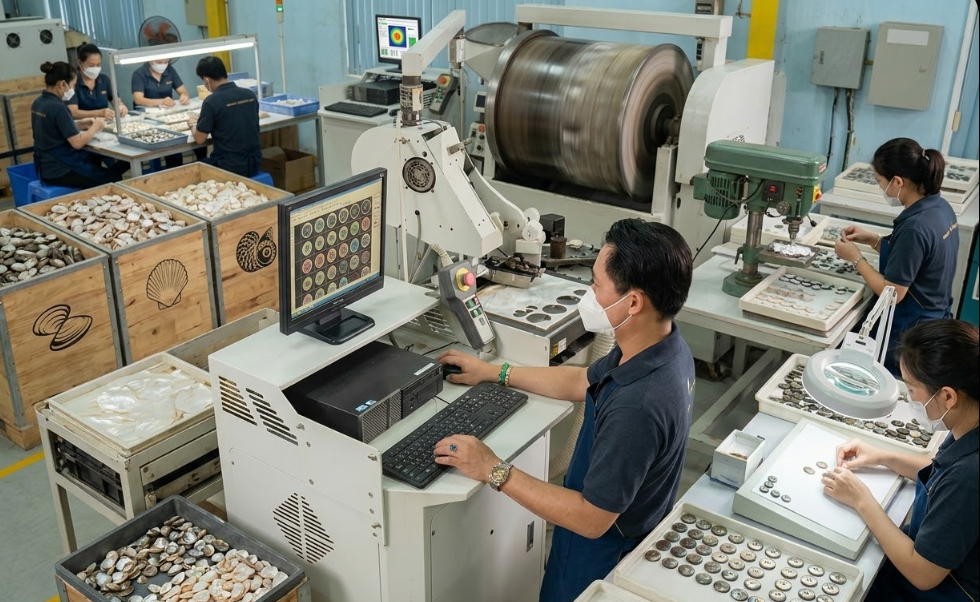
When a buyer looks for a Mother of Pearl buttons supplier, they are not only looking for someone who can send a quick quotation. What they really need is a supplier who can produce consistently, deliver the right quality, keep the timeline under control, and support the order when it moves into real production.
With Mother of Pearl buttons, also known as MOP buttons, the biggest risk is not “not being able to find a supplier.” There are many suppliers in the market. The real risk is choosing a supplier who cannot properly control the material, samples, QC, lead time, and bulk production process.
For garment brands, buying houses, sourcing agents, and OEM apparel factories, a button may be small, but it can still affect the entire production schedule. If the buttons have color variation, unstable thickness, chipped edges, poor drilling, or delayed delivery, the garment production plan behind them can also be affected.
That is why buyers should check the supplier carefully before sending an RFQ or placing a bulk order. Not to make the process complicated, but to avoid bigger problems later.
Do Not Look at Price Only
Many buyers start with the same question: “What is the price?” This question is necessary, but it is not enough.
With MOP buttons, price is only one part of the decision. A supplier with a low price but poor quality control may cost the buyer more later. For example, the buttons may have inconsistent color, unstable thickness, off-center holes, sharp edges, weak packaging, or unrealistic lead time.
Instead of only asking for price, buyers should ask better questions. Does the supplier understand the product requirements? Can they provide samples before bulk production? Do they have clear QC standards? Can they keep consistency between batches? Can they support OEM/custom requirements? Do they have experience with export packaging?

A good supplier does not only sell you a button. A good supplier helps you reduce risk before the order enters production.
Check the Material First
For Mother of Pearl buttons, material is the first thing buyers should check. MOP is a natural material, so it can vary in shine, tone, clarity, surface texture, thickness, and consistency.
Some MOP materials are suitable for premium shirts. Some are better for luxury apparel. Others may work well for products that need a balance between appearance and cost. So buyers should not only ask, “Do you have MOP buttons?” A better question is: What type of MOP is this, what product is it suitable for, what is the common thickness, can the color be sorted, and how consistent is it between batches?
If you are producing high-end shirts, pay close attention to the pearlescent shine, color tone, and surface quality. A good MOP button can make a shirt feel much more premium. But if the buttons on the same shirt have obvious tone differences, the product can lose its refined feeling.
In simple terms, with MOP, buyers are not just buying “shell buttons.” They are buying the stability of a natural material.
Do Not Approve an Order by Photos Only
Photos can help buyers make an initial judgment, but they are not enough for a serious B2B order. With MOP buttons, the beauty is in the light, surface, and real hand feel. These details may not show clearly in photos.
So if the order is important, buyers should request samples before confirming bulk production. When you receive the sample, do not only look at the button by itself. Place it on the actual fabric, in the actual garment color, and in the actual position where it will be used.
A button may look beautiful on a white background, but it may not look right on the finished garment. The color may be slightly off, the shine may not match, the gloss may be too strong, or the size may not balance with the design.
For premium shirts or luxury apparel, sample approval is even more important. Buyers should approve one standard sample as the golden sample. This sample becomes the reference for bulk production and future reorders.
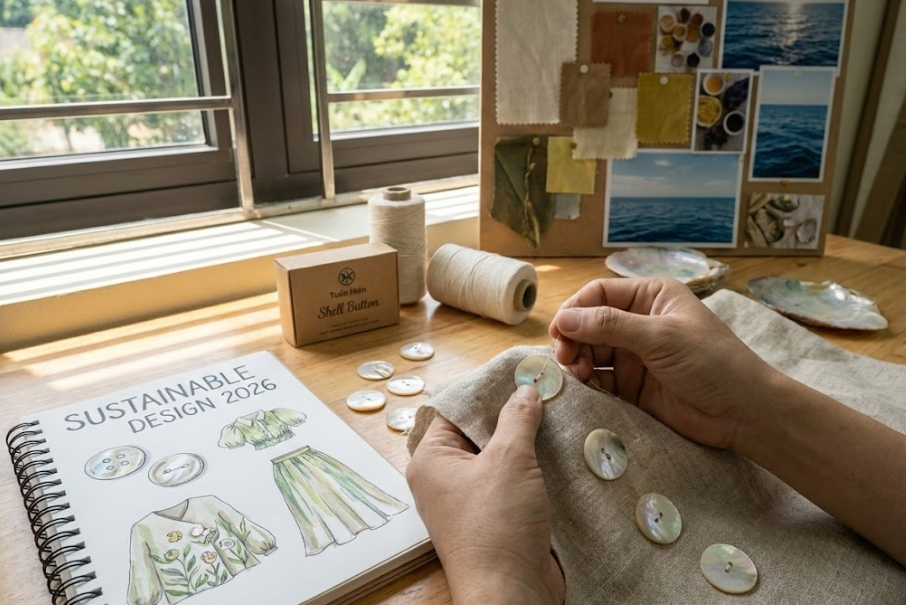
Without a golden sample, both sides may understand “acceptable quality” differently. And when the goods are already finished, any disagreement becomes much harder to solve.
QC Must Be Clear, Not General
A reliable supplier should have clear QC standards. For MOP buttons, QC cannot stop at phrases like “good quality” or “nice finish.”
Buyers should check specific details: size consistency, thickness stability, hole position, edge smoothness, surface cracks, chips, sharp edges, color variation, finish consistency, and whether the packaging can protect the product properly.
With Mother of Pearl, natural variation is normal. But natural variation is not the same as a production defect. A good supplier should help buyers understand what kind of variation is acceptable and what should not appear in the order.
This is very important for B2B buyers. If QC is not clear from the beginning, defects may only be found after the goods arrive at the garment factory. At that point, the cost of fixing the problem is much higher, and the production schedule can be affected.
Is the MOQ Reasonable?
MOQ should not be understood simply as the minimum quantity a supplier wants to sell. With MOP buttons, MOQ is connected to material preparation, production setup, cutting, drilling, polishing, sorting, QC, and packaging.
A very low MOQ may sound attractive, especially when a buyer wants to test a supplier. But if the quantity is too low, the cost per button may be higher, and consistency may be harder to control.
On the other hand, an MOQ that is too high may not be suitable for buyers developing a new collection or testing quality for the first time.
So the best question is not only, “What is your lowest MOQ?” A better question is, “What MOQ makes sense for this material, this size, this finish, and my reorder plan?”
An experienced supplier will not only give you a number. They will explain why that MOQ is practical for your order.
Is the Lead Time Realistic?
With MOP buttons, lead time is not only production time. It includes confirming details, checking material, making samples, approving samples, bulk production, QC, packaging, and delivery preparation.
If the order includes OEM/custom requirements, logo engraving, laser marking, dyed finish, or custom packaging, the lead time will need more room.
Buyers should be careful with quotations that show a very short lead time without explaining the process. A lead time that looks good on paper can become a real problem if the supplier has not included sampling, QC, or export packaging time.
A better approach is to ask the supplier to separate the sampling lead time and the bulk production lead time. This helps the buyer plan more accurately, especially when the buttons are part of a larger production schedule for shirts, knitwear, or luxury apparel.
Can the Supplier Really Handle OEM/Custom Orders?
Many buyers do not only need standard MOP buttons. They need custom size, custom thickness, special finish, logo engraving, laser marking, or branded packaging.
If you need OEM/custom Mother of Pearl buttons, check whether the supplier can truly handle the requirement. Can they engrave a clear logo on the MOP surface? Can they support special finish? Can they make custom packaging? Can they provide samples before bulk production?
For logo work, buyers should send a clear file and ask about technical limits. A logo that is too small or too thin may not appear cleanly on the button surface. A good supplier will point this out before production, instead of accepting the order first and discovering the issue later.
Packaging Is Not a Minor Detail
For MOP buttons, packaging deserves real attention, especially for export orders. MOP is a natural material, so it should be protected from scratches, chips, and impact during shipping.
An order with beautiful buttons can still become a problem if the packaging is poor. Buyers should ask the supplier how the buttons are packed, how sizes are separated, how the surface is protected, what labels are used, what carton standards are applied, and whether export documents can be supported.
A good supplier does not only make a good product at the factory. They make sure the product arrives in stable condition, easy to inspect, and ready for production.
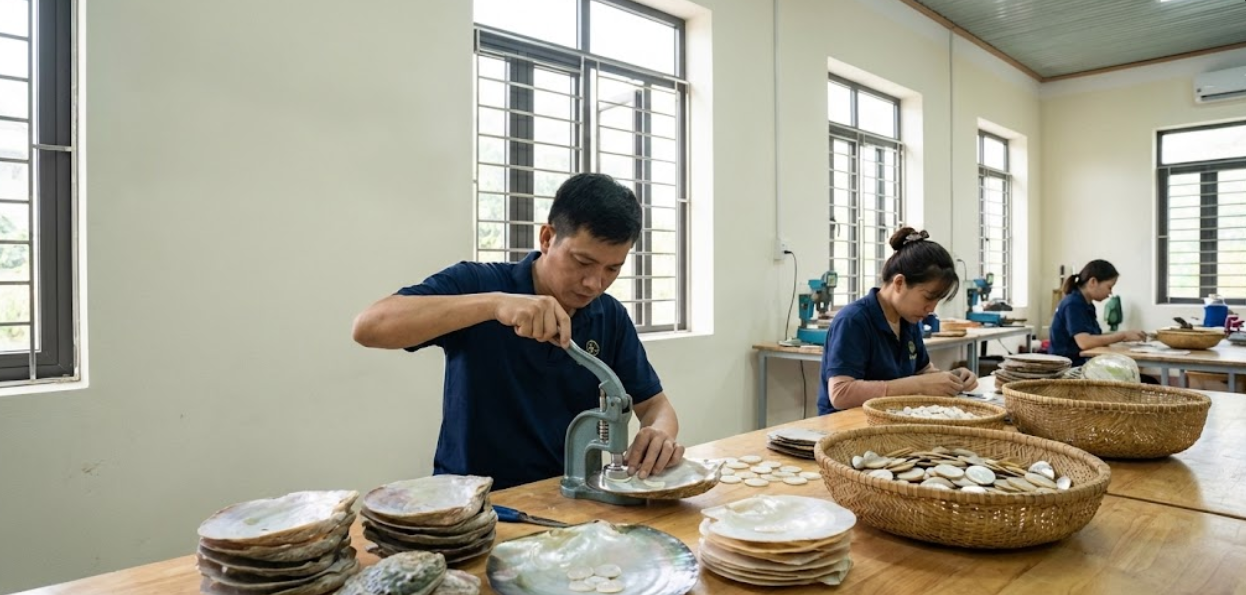
The Way a Supplier Responds Also Shows Their Capability
In B2B sourcing, communication is part of supplier capability.
A supplier who replies quickly but vaguely can still create risk. A supplier who replies too slowly can also affect the buyer’s timeline. What buyers need is a supplier who responds clearly, stays on point, and asks the right questions.
When you send an RFQ, pay attention to how the supplier replies. Do they clarify material, size, thickness, finish, quantity, MOQ, lead time, and packaging? Do they give practical advice if the requirement is not realistic? Do they ask about the product application?
An experienced supplier usually does not just say, “Yes, we can do it.” They help the buyer see the details that may affect price, quality, and delivery.
What Buyers Should Prepare Before Contacting a Supplier
To receive a more accurate quotation, buyers should prepare the basic information first: material, size, thickness, number of holes, finish, quantity by size, product application, packaging, destination country, Incoterms, deadline, and OEM/custom requirements if any.
If there are reference images, a spec file, a logo file, or an old sample, send them from the beginning. These details help the supplier understand the requirement and reduce unnecessary back-and-forth communication.
A clear RFQ does more than help you get a faster quotation. It also helps you evaluate the supplier better. A supplier who replies clearly, asks the right questions, and gives practical advice is usually worth continuing the conversation with.
Why Tuan Hien Is Suitable for B2B Buyers Looking for Mother of Pearl Buttons
Tuan Hien supports B2B buyers who need Mother of Pearl buttons and other shell buttons for shirts, luxury apparel, knitwear, and bulk production.
The key value is not only supplying buttons. The more important value is helping buyers clarify material, size, thickness, finish, MOQ, lead time, QC, sample approval, packaging, and OEM/custom requirements before the order enters production.
For garment brands, buying houses, sourcing agents, and OEM apparel factories, this approach helps reduce risk, save time, and create a better foundation for future reorders.
When buyers send a clear RFQ, Tuan Hien can respond faster, give more relevant recommendations, and support a more stable ordering process.
Conclusion
Choosing a Mother of Pearl buttons supplier should not be based on price alone. For B2B buyers, the right supplier should be able to control material, samples, QC, MOQ, lead time, OEM/custom requirements, and export packaging.
A good supplier helps you understand the product before you place the order. They do not only send a quotation; they help you reduce risk before real production begins.
If you are sourcing Mother of Pearl buttons for shirts, luxury apparel, or bulk orders, start with a clear RFQ. The clearer your material, size, thickness, finish, quantity, and deadline are, the easier it is to receive an accurate quotation and a realistic lead time.
Send your RFQ to Tuan Hien to get practical advice on Mother of Pearl buttons that match your product, QC standards, and production plan.


