

MOQ & Lead Time for Shell Buttons: What Buyers Should Understand Before Placing an Order
In the fashion industry, some details may look very small, but they can strongly affect the overall feeling of a product. A shell button may only sit on a collar, cuff, or front placket, but it still contributes to the premium, refined, and reliable feeling of a garment.
That is why, when a buyer asks, “What is the MOQ?” or “How long is the lead time?”, the answer is usually not just one fixed number.
For shell buttons, especially natural materials such as MOP, Trocas, Agoya, River shell, and Abalone, MOQ and lead time depend on many factors: material, size, thickness, finish, quantity, custom level, sample approval time, QC standards, packaging, and export requirements.
To put it simply, even if two orders are both for shell buttons, the process can be very different. If the buyer chooses a standard style, the process may be faster. But if the buyer needs logo engraving, laser marking, custom color, special finish, custom packaging, or high batch consistency, the order will need more time for checking, sampling, and stable production.
That is why MOQ and lead time should be seen as part of the production plan, not just as details to ask at the end of the conversation.
MOQ Is Not Just a Minimum Quantity
MOQ stands for Minimum Order Quantity. Many buyers think MOQ is simply a number set by the factory. But in real production, MOQ is directly connected to raw materials, labor, machinery, setup time, sorting, quality inspection, and packaging.
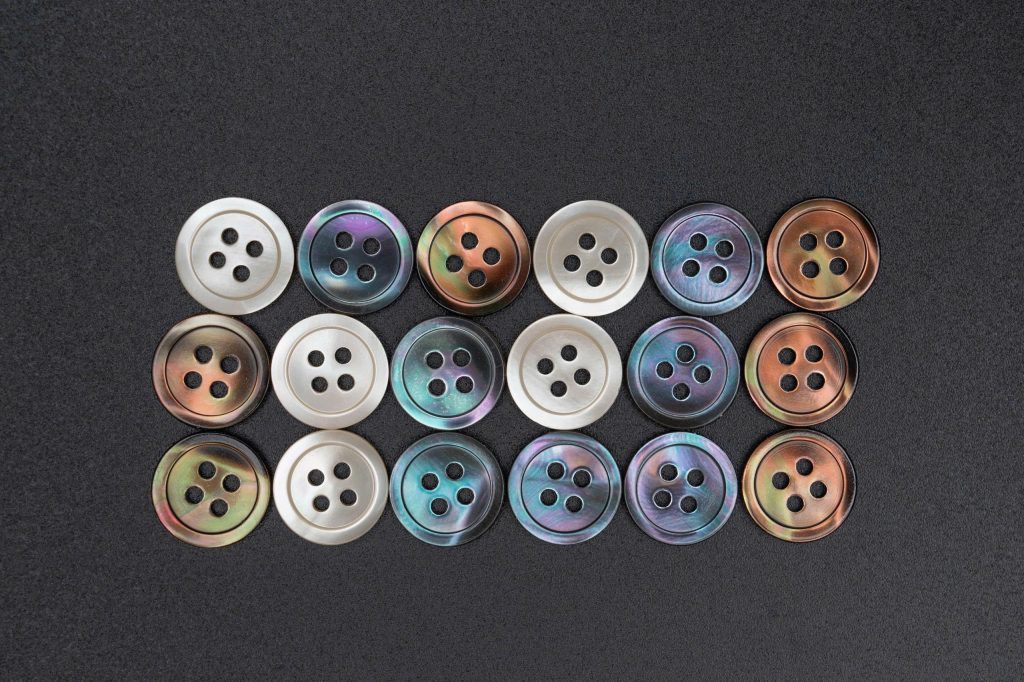
For plastic or metal buttons, the product may be more uniform. But shell buttons are natural materials. Each piece of shell can have different shine, grain, color, and thickness. Before becoming a finished button, the material must be selected, cut, drilled, polished, checked, and sorted.
If the order quantity is too low, the factory still needs to go through almost the same production steps. As a result, the cost per button may become higher, and consistency may be harder to control.
So the best question is not:
“What is your lowest MOQ?”
A better question is:
“What MOQ makes the most sense for balancing price, quality, stability, and delivery time?”
This is how a professional B2B buyer should look at MOQ.

Lead Time Is Not Only Production Time
Lead time is often understood as the time a factory needs to produce the goods. But with shell buttons, lead time starts much earlier — from the moment order details are clarified.
A normal order usually goes through several steps: confirming specifications, checking material, making samples, approving samples, bulk production, QC, packaging, and delivery preparation.
If the order includes OEM/custom requirements, logo engraving, laser marking, dyed finish, special finish, or custom packaging, lead time will be longer because additional sample testing and approval are needed.
In reality, many orders are delayed not because the factory is slow, but because the initial information is unclear.
For example, the logo file may not be in the correct format, the size breakdown may be incomplete, the finish description may be too general, the deadline may not be confirmed, or reference photos may be missing. These small details can force the supplier to ask more questions, revise the quotation, or remake samples.
A good lead time starts with a clear RFQ.
Different Materials Affect MOQ and Lead Time
Buyers should not see MOP, Trocas, Agoya, River shell, and Abalone as just names in a catalogue. Each material has its own characteristics, and those characteristics directly affect the production process.
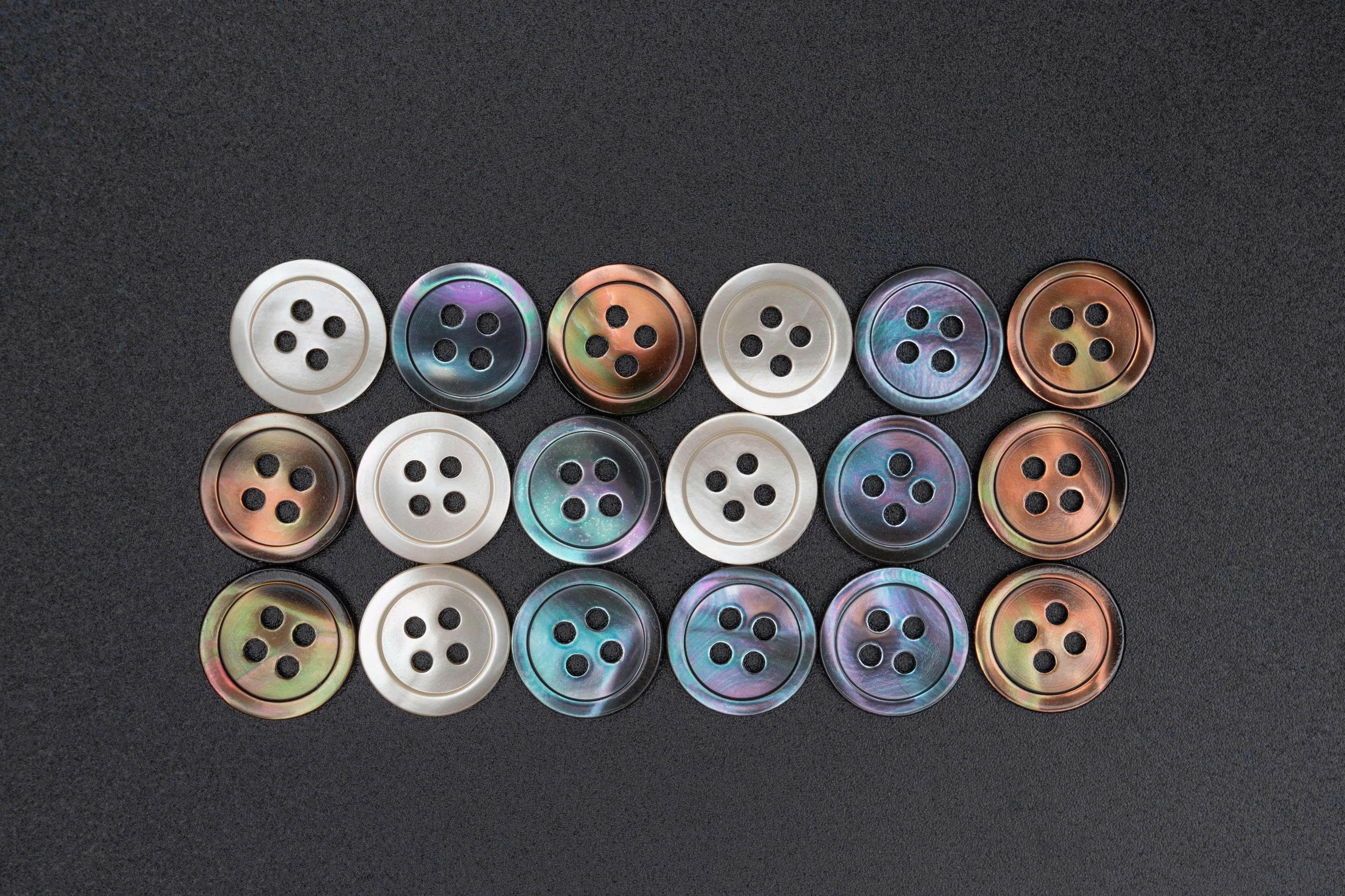
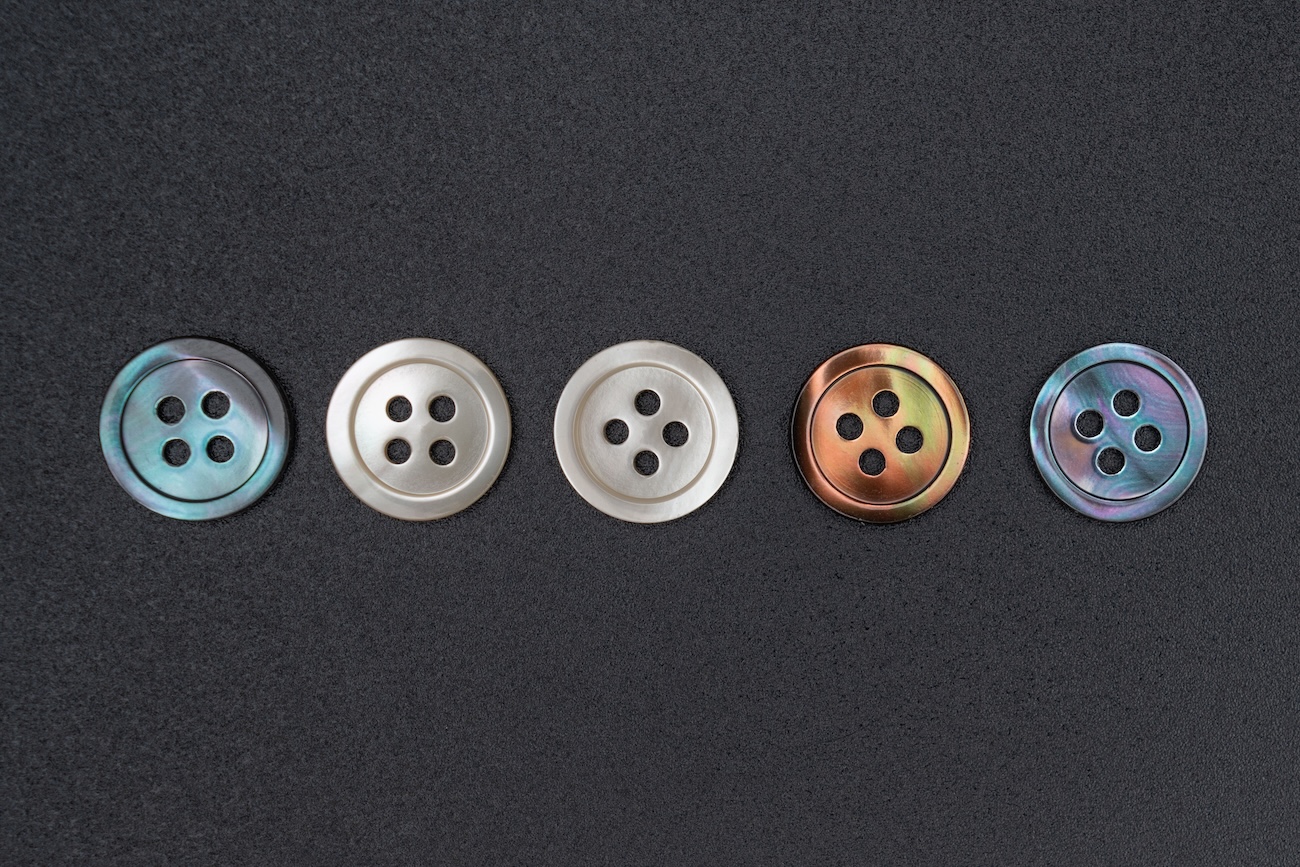
MOP – Mother of Pearl is often selected for premium shirts, tailoring, and luxury apparel. MOP has a soft, deep, and refined pearlescent shine. It creates a premium feeling without being too loud. However, because it is a natural material, MOP can have slight differences in color, shine, and surface quality. If the buyer requires high consistency between buttons, the factory needs more time for sorting and QC. Therefore, MOQ and lead time for MOP may be higher for premium-quality orders.
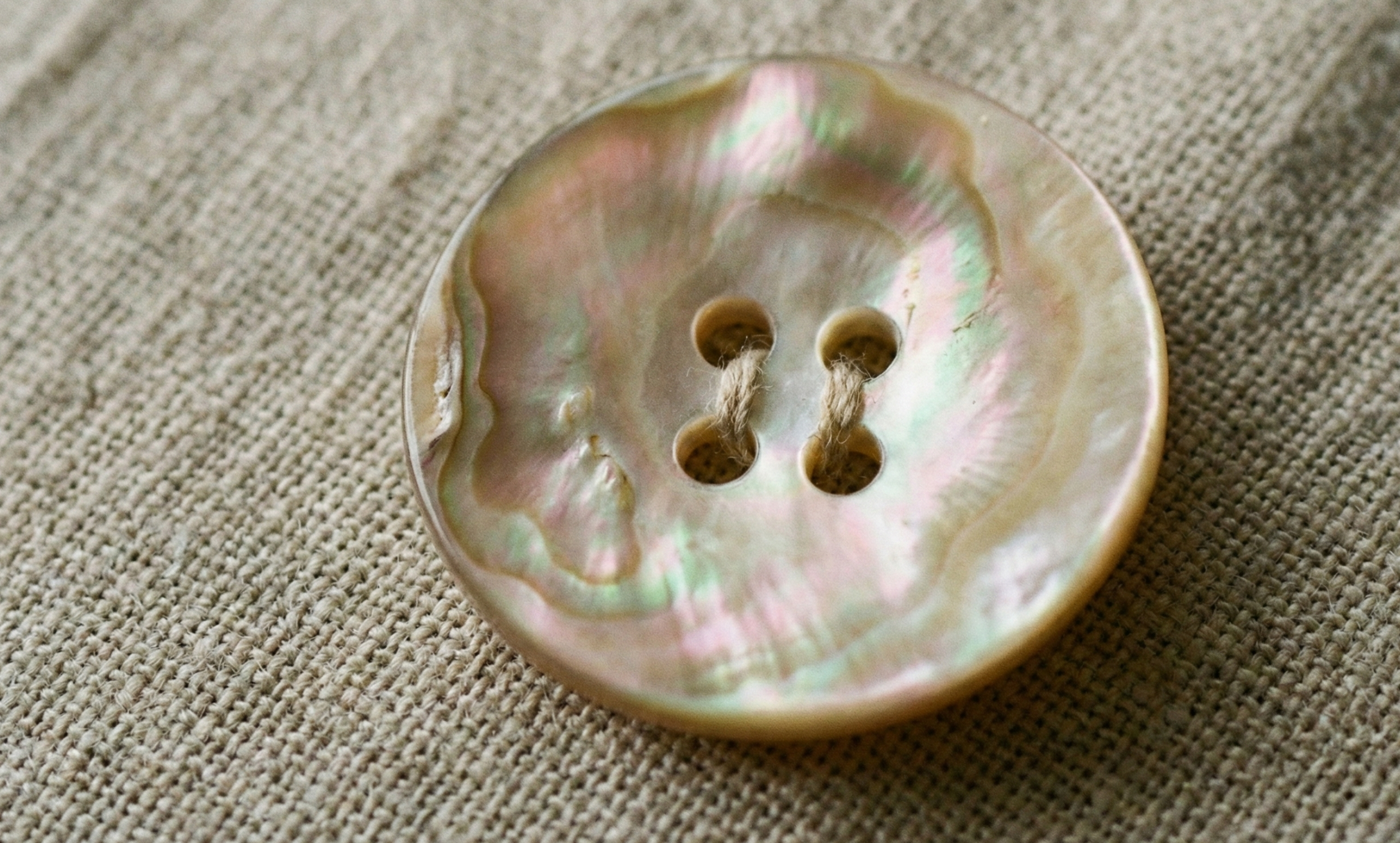
Trocas is a more practical and stable choice for many bulk orders. Trocas is suitable for shirts, knitwear, casualwear, uniforms, and products that require stable, durable, and lower-risk production. If the specifications are not too complex, Trocas is often easier to control, especially for orders with reorder demand.
Agoya is suitable for products that need a refined, light, and fashionable feeling. It is often used for womenswear, fashion shirts, or collections that need a distinctive detail. However, if the buyer requires a very specific color or finish, sample approval is still very important.
River shell is often suitable for casual, lifestyle, or cost-balanced products that still need a natural look. MOQ and lead time for River shell depend heavily on size, thickness, and surface finishing requirements.
Abalone is a more expressive material. Its color and natural pattern are more striking, making it suitable for designs that need a statement detail. However, because Abalone has stronger natural variation, it needs more careful sorting if the buyer requires consistency in a large order.
The important point is that there is no material that is “best for every case.” There is only the material that best fits the buyer’s product, budget, timeline, and quality standard.
The Higher the Custom Level, the Clearer the Plan Must Be
A standard shell buttons order is usually faster. The buyer chooses available material, common size, standard thickness, common hole style, and a regular finish. Since the factory is already familiar with this process, quotation and production can move faster.
But when the order becomes OEM/custom, everything needs to be clarified more carefully.
If the buyer needs a custom size or custom thickness, the supplier must adjust the cutting, drilling, and inspection process. If the tolerance requirement is tight, QC must be stricter. If the buyer needs a special finish such as matte, glossy, polished, dyed, or a surface treatment based on a specific concept, samples must be tested and approved first.
For logo engraving or laser marking, lead time will increase because the supplier needs to check the logo file, engraving position, logo size, and clarity on the button surface. A logo that is too small or too thin may need to be adjusted so it remains clear and attractive after engraving.
For a complete OEM/custom bulk supply order, the buyer may require multiple custom elements at the same time: custom material, custom size, custom finish, custom logo, custom packaging, and custom QC standards. These orders require more detailed communication at the beginning, but once the standard sample is approved, future reorders become much easier.
Sample Approval Helps Prevent Bigger Risks Later
Some people think sample approval slows down the process. But with shell buttons, sample approval helps both buyer and supplier agree on the same standard.
A button may have the correct size but not the right feeling. It may use the correct material, but the color may not be suitable. It may have the correct finish, but the gloss level may not match the final garment.
That is why the golden sample is very important.
A golden sample is the approved standard sample before bulk production. Once a golden sample is confirmed, the supplier knows exactly what color, shine, thickness, hole style, surface quality, and overall standard must be achieved. The buyer also has a clear reference for checking future batches.
Proper sample approval does not slow the order down. On the contrary, it helps avoid the bigger problem of finishing production only to find that the goods do not meet expectations.
QC Must Be Clear, Not General
In B2B production, quality cannot only be described with words like “nice,” “good,” or “premium.” These words may sound good, but in production, they need to be translated into measurable standards.
For shell buttons, QC should clarify details such as thickness, hole position, tolerance, surface defects, chipped edges, cracks, sharp edges, color variation, batch consistency, and packaging standards.
The claim or defect-handling process should also be discussed in advance. If there is a problem, both sides should understand how it will be handled and which standard will be used for judgment.
A reliable supplier does not only deliver the correct quantity. They help the buyer understand what is acceptable, what is not acceptable, and how to keep future batches consistent.
Packaging and Export Preparation Also Affect Lead Time
For shell buttons, packaging should not be treated as a minor detail. Because they are natural materials, buttons need to be protected from chipping, scratching, impact, or mixed sizes during transportation.
If the buyer requires custom packaging, size separation, material separation, private labels, specific cartons, or export packaging standards, the lead time will need extra preparation time.
Buyers should clarify details such as destination country, preferred shipping terms, packaging requirements, carton information, and required documents for the shipment. Depending on the agreement, the supplier may support areas such as export packaging, packing list, commercial invoice, carton details, gross weight, net weight, and shipping coordination.
These details help make quotation, goods preparation, and shipping coordination clearer. When packaging and export preparation are confirmed from the beginning, buyers can inspect, receive, store, and coordinate with their logistics partner more easily.
How Buyers Can Shorten Lead Time
Lead time is not completely controlled by the supplier. Buyers can also help the process move faster by preparing clear information from the beginning.
A good RFQ should include: material, size, thickness, holes, finish, quantity by size, custom details, packaging requirements, destination country, preferred shipping terms, delivery deadline, and reference photos.
If there is a logo, the buyer should send a clear file. If there is an old sample, the buyer should provide photos or a physical sample. If there is reorder demand, the buyer should share the monthly or seasonal plan.
The clearer the information, the fewer questions the supplier needs to ask. Fewer questions mean faster quotation, faster sampling, and more accurate production planning.
A vague RFQ creates many rounds of emails. A clear RFQ creates a clear working path.
MOQ and Lead Time Are Part of Product Strategy
A shell button is a small detail, but if it is delayed or does not meet the quality requirement, it can affect the entire garment production plan.
If a brand chooses a very special material but has a very short deadline, the risk will increase. If the buyer requests complex customization but has not approved the sample, the lead time will be difficult to confirm accurately. If the buyer wants high consistency but the MOQ is too low, cost and quality control may not be optimized.
Therefore, MOQ and lead time should not be seen as two small lines in a quotation. They are part of product strategy and supply chain planning.
The material the buyer chooses, the custom level, the QC requirement, the delivery deadline, the packaging requirement, and the shipping terms are all connected.
An experienced supplier will help the buyer see these connections before the order enters production.
How Tuan Hien Supports B2B Buyers
For B2B buyers, the key is not only to place one order. The more important goal is to build a repeatable process.
Tuan Hien supports shell buttons orders in a practical way by helping buyers clarify material, specification, MOQ, lead time, OEM/custom requirements, sample approval, QC, packaging, and export preparation.
The goal is not only to produce buttons, but also to help buyers reduce risks during sourcing and production. When the information is clear from the beginning, quotation becomes faster, sample approval becomes easier, and production becomes more stable.
Tuan Hien can support buyers with export packaging, packing list, commercial invoice, carton information, shipping coordination, and the information needed for export preparation. This helps buyers inspect, receive, store, and coordinate with their logistics partner more easily.
If you are a garment brand, buying house, sourcing agent, or OEM apparel factory, preparing the right information from the start can save a lot of time in the following steps.
Conclusion
MOQ and lead time are not fixed numbers for every order. They change depending on material, size, thickness, finish, custom level, sample approval, QC, packaging, and export requirements.
If the buyer needs a fast order, the specification should be clear and the custom level should be reasonable. If the buyer needs a premium product, enough time should be allowed for sample approval and QC. If the buyer wants to build a long-term supply chain, a reorder system should be planned from the first orders.
In fashion, small details are never truly small. The right shell button can make a product feel more complete. The right ordering process can make the entire supply chain more stable.
So do not ask MOQ and lead time only to get a number. Treat them as part of your product, production, and brand planning.


