

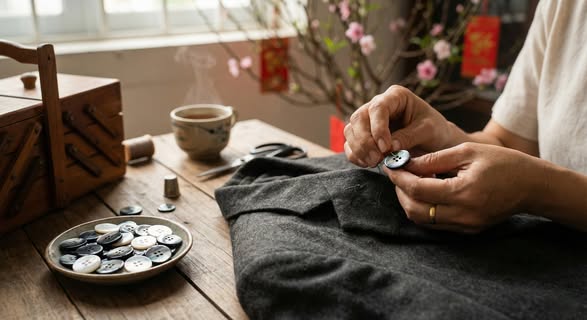
In knitwear, a button is not only used to open and close a garment. It also needs to handle pulling force, fabric movement, friction, garment weight, and real daily use. That is why, when choosing shell buttons for knitwear, buyers should not only look at color or shine. The more important question is whether the button has the right size, thickness, and durability for the final product.
For fashion brands, buying houses, and OEM apparel factories, a small button issue can create a bigger production problem. A button that is too thin may chip easily. A button that is too small may look weak on thicker knitted fabric. A button that is too heavy may pull the knitwear out of shape. A beautiful button that is not durable enough can affect both the wearer’s experience and the brand’s image.
This guide explains how B2B buyers can choose shell buttons for knitwear more practically, especially when preparing for OEM/custom orders, bulk production, or sourcing from a supplier such as Tuan Hien.
.
Why Knitwear Needs More Careful Button Selection Than Regular Shirts
Knitwear is different from woven shirts. Knitted fabrics often have more stretch, softness, and variation in thickness. A light knit polo, thin sweater, cardigan, or heavy knit jacket may each require a different button.
On a woven shirt, the button is usually attached to a more stable fabric base. On knitwear, however, the fabric surface can stretch, move, and place different pressure on the button. When the wearer buttons, unbuttons, pulls, washes, folds, or stores the garment, the button may go through more stress than it appears to.
That is why buyers should see the button as part of the product structure, not just as a decorative detail.
A good shell button for knitwear should meet three basic requirements. First, the size must match the fabric thickness and garment style. Second, the thickness must be strong enough for use without making the garment feel heavy. Third, the durability must match the product’s usage frequency and the brand’s quality standard.
Size: Choose the Button Size Based on the Type of Knitwear
Size is the first factor buyers should define. The right button size helps the garment look balanced and easy to use. The wrong size can make the whole design feel less refined.
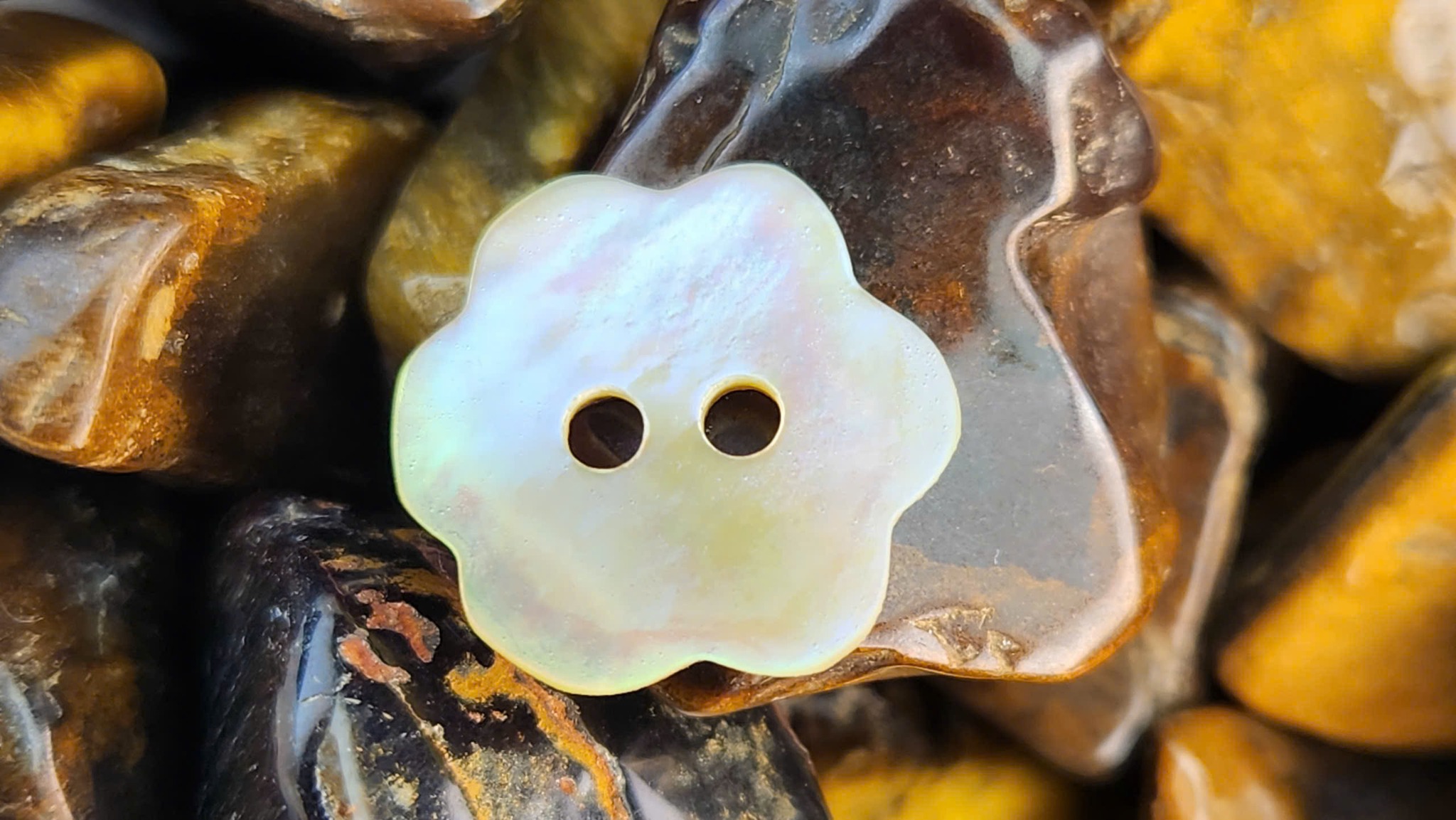
For lighter knitwear such as knit polos, thin sweaters, or lightweight cardigans, the button should usually not be too large. A button that is too big may add unnecessary weight to the fabric and pull the placket downward. In this case, buyers should consider shell buttons with a moderate size, refined surface, and suitable weight.
For thicker cardigans or knit jackets, a larger button may work better. A small button on thick knitwear can look visually weak and may not support the garment’s overall structure. A slightly larger button with proper thickness can make the product feel stronger, more balanced, and more premium.
For luxury knitwear, size is not only a technical specification. It is also part of the design language. The button should be visible enough to support the garment’s character, but not so strong that it distracts from the main fabric.
A practical way to decide is to ask:
Is this button supporting the product, or is it making the product feel unbalanced?
If the button makes the garment look more refined, more stable, and more complete, the size is likely suitable. If it makes the garment feel heavy, distorted, or difficult to use, the size should be adjusted.
Thickness: Button Thickness Affects Both Feel and Strength
After size, thickness is one of the most important factors. With shell buttons, thickness directly affects durability, hand feel, and resistance to pressure.
A button that is too thin may look elegant, but it may not be strong enough for knitwear, especially when the garment is thick or frequently used. A thin button can also feel weak on a premium product.
A button that is too thick creates the opposite problem. It may feel stronger, but if it does not match the fabric, it can make the garment feel heavy, stiff, or less comfortable. This is especially important for premium knitwear, where softness and comfort are part of the product value.
That is why thickness should be selected based on fabric weight, garment type, and button position.
For lightweight knitwear, buyers should consider moderate thickness, light weight, and easy usability. For cardigans or knit jackets, a thicker button may be more suitable because it adds strength and structure. For premium products, thickness should remain consistent across the full batch to avoid an uneven quality impression.
In the RFQ, buyers should clearly mention the required thickness and tolerance. Without this information, the supplier may follow a general standard, but that standard may not be suitable for the buyer’s specific garment.
Durability: Strength Is Not Only About the Material
When people talk about durability, they often think only about whether the button breaks easily. But for shell buttons used on knitwear, durability should be understood more broadly.
A durable button should handle repeated fastening and unfastening, friction with fabric, washing, packaging, and transportation. It should also keep a clean surface after use, without easy chipping, cracking, sharp edges, or discomfort for the wearer.
Because shell buttons are natural materials, durability depends on several factors: material type, thickness, surface treatment, drilling quality, edge finishing, and QC standards.
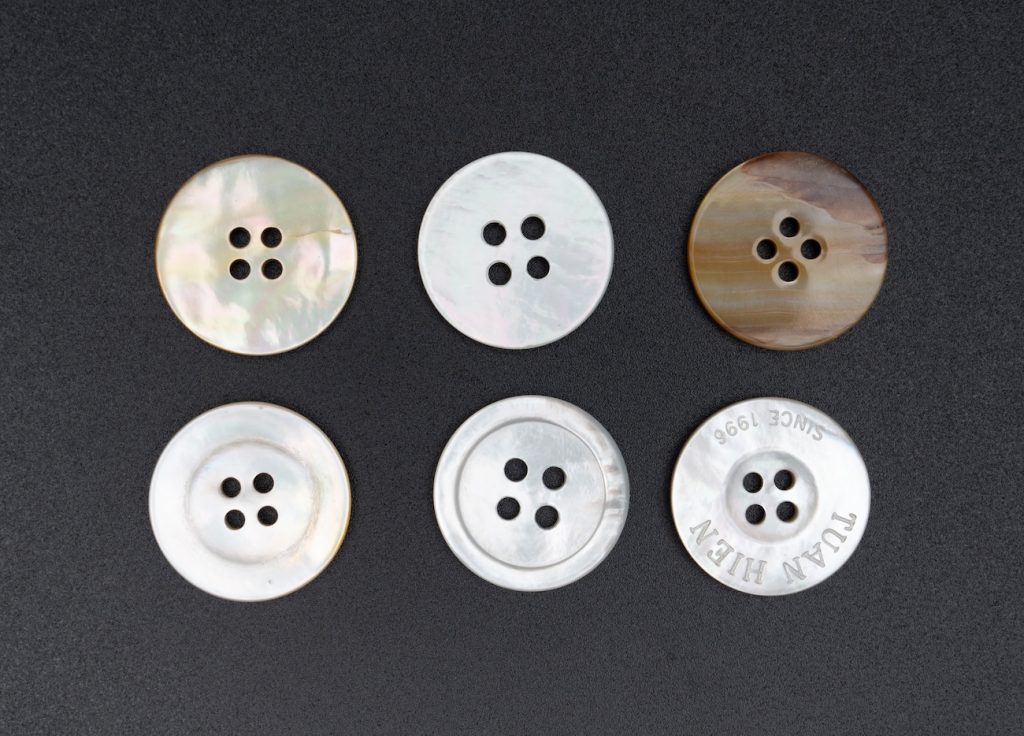
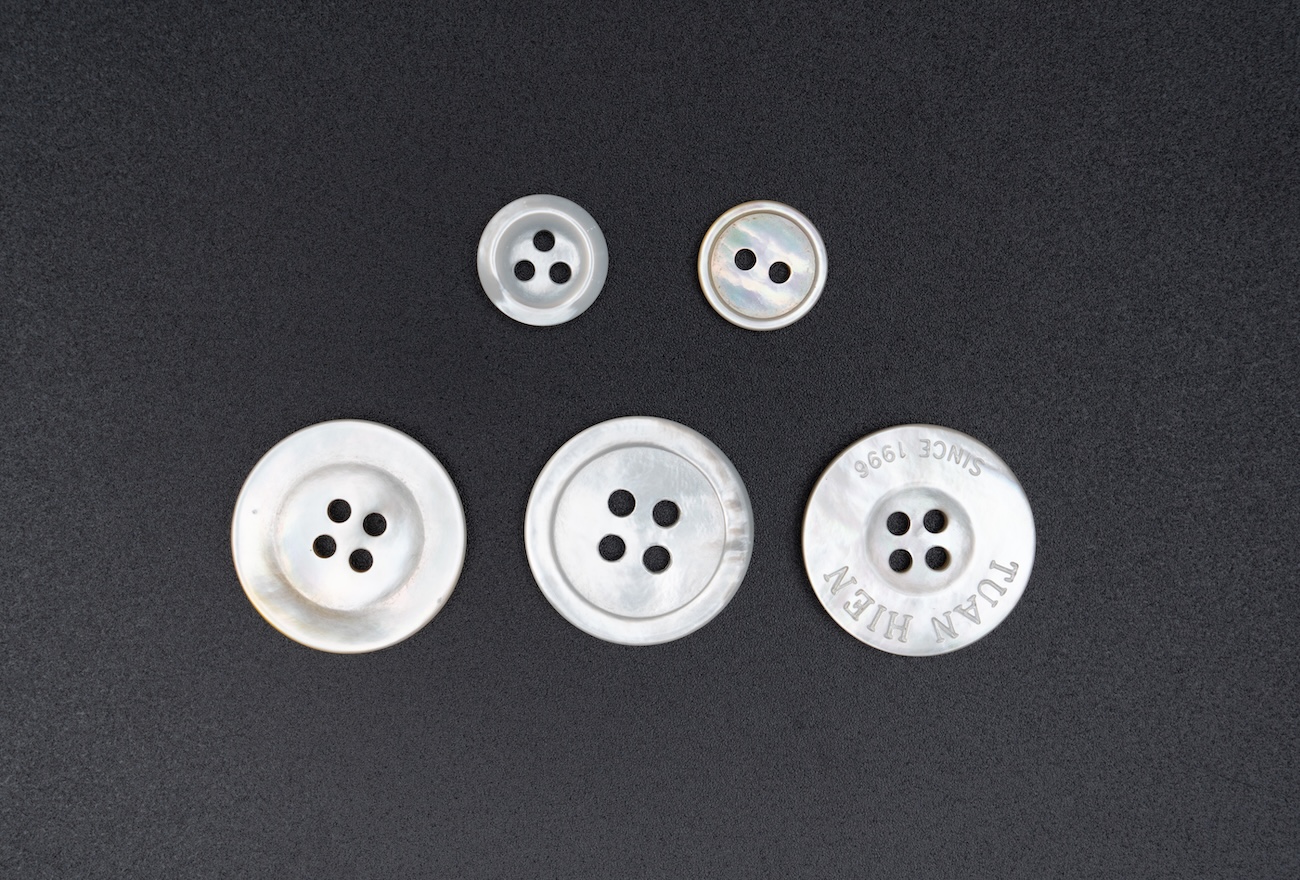
For example, Trocas is often a practical choice for knitwear because it offers good stability, works well for bulk orders, and suits products that need consistent durability. MOP is more suitable for premium knitwear that needs refined beauty and a more luxurious pearlescent effect. However, when using MOP for knitwear, buyers should pay close attention to thickness, edge finishing, and QC standards to ensure practical durability.
Buyers should not choose a material only because it looks beautiful in photos. They should ask the supplier:
Is this button suitable for knitwear?
Is this thickness strong enough for the fabric?
Are the edges properly finished?
Are the holes clean and stable?
Can samples be tested on the actual garment?
A good supplier does not simply sell a button. A good supplier helps the buyer choose the button that fits the final product.
MOP or Trocas: Which Is Better for Knitwear?
There is no single correct answer. The right choice depends on the product positioning.
If the buyer is producing premium knitwear, high-end cardigans, or garments that need a more luxurious feeling, MOP is worth considering. MOP has a natural pearlescent shine that makes the garment feel more refined and valuable. However, MOP should be carefully sorted if the buyer requires high consistency.
If the buyer is producing knitwear in larger quantities, or products that require durability, stability, and easy reordering, Trocas is often the more practical choice. Trocas works well for orders that need stable quality, lower production risk, and repeatable supply.
A simple way to understand it is:
MOP is suitable when the priority is a premium feeling.
Trocas is suitable when the priority is stability and production practicality.
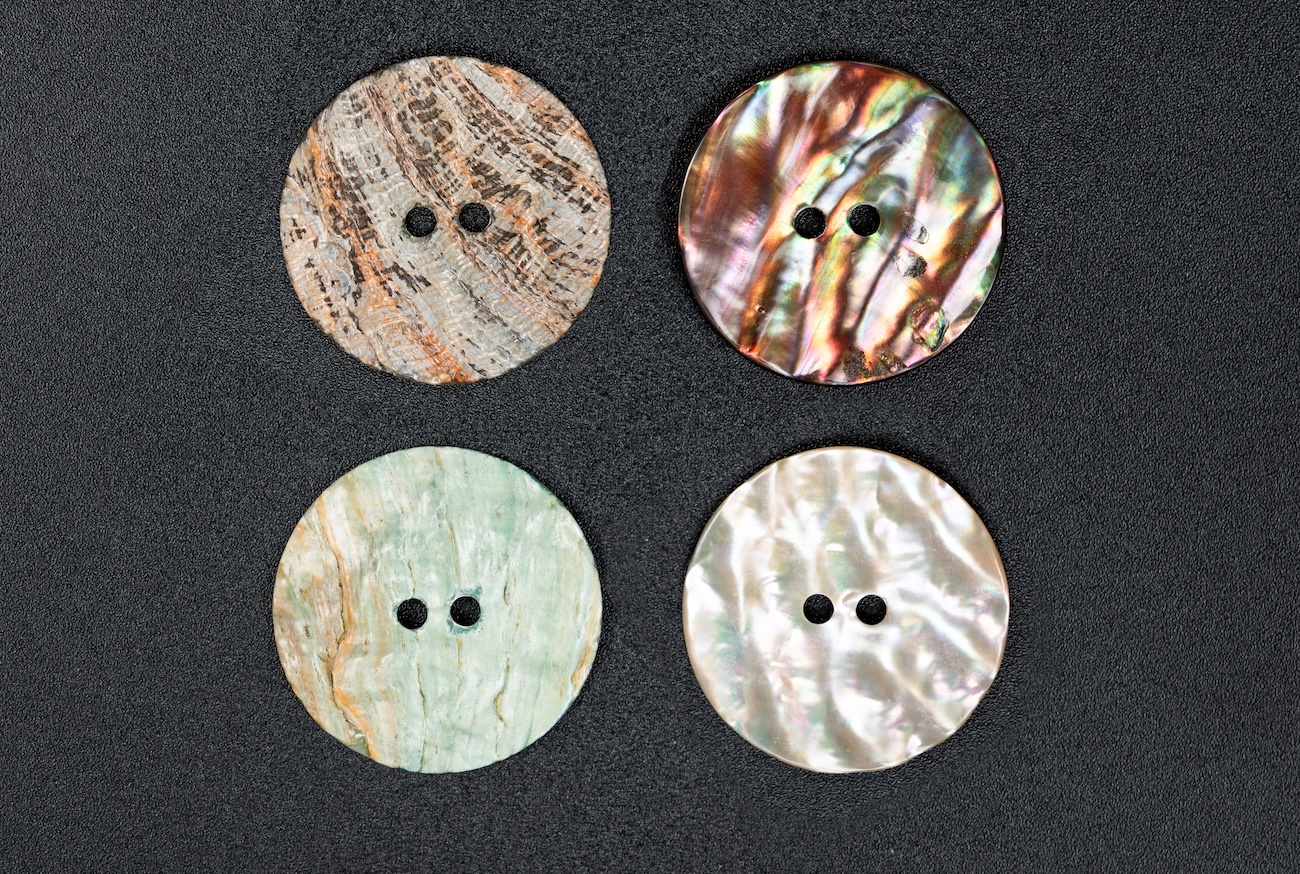
For many brands, the best solution is not to choose one material for every product. Premium lines may use MOP. Casual or bulk lines may use Trocas. Special collections may consider Agoya, River shell, or Abalone when a distinctive effect is needed.
What Buyers Should Prepare Before Sending an RFQ
A clear RFQ helps the supplier quote faster and more accurately. For shell buttons for knitwear, buyers should prepare the following information:
The type of knitwear: cardigan, knit polo, sweater, knit jacket, or another product.
Fabric material and fabric thickness.
Preferred shell type: MOP, Trocas, Agoya, River shell, or Abalone.
Button size in mm or Ligne.
Required thickness and tolerance, if any.
Number of holes: 2-hole, 4-hole, or custom.
Finish: matte, glossy, polished, dyed, or special finish.
Quantity by size.
OEM/custom requirements such as logo engraving or laser marking.
Packaging requirements.
Required deadline.
Reference photos or physical samples, if available.
The clearer the information, the easier it is to control lead time. On the other hand, if the RFQ only says “we need shell buttons for knitwear,” the supplier will need to ask many follow-up questions, which slows down quotation and sampling.
Why Samples Should Be Tested on the Actual Garment
For knitwear, sample testing is highly recommended. A button may look beautiful on its own, but it may not work well once attached to the actual garment.
When testing samples, buyers should check four key points.
First, check proportion. Does the button match the fabric thickness and garment style?
Second, check usability. Is the button easy to fasten and unfasten?
Third, check stability. When the placket is gently pulled, does the button create too much pressure on the fabric?
Fourth, check appearance. Do the color, shine, finish, and surface quality match the design direction?
This is why the golden sample is important. Once the buyer approves a standard sample, the supplier can use it as the reference for bulk production and future reorders.
QC Points for Shell Buttons Used on Knitwear
For knitwear, QC should not only focus on appearance. Buyers should ask the supplier to check the factors that directly affect durability and user experience.
Important QC points include thickness consistency, hole position, edge smoothness, surface cracks, chips, color variation, finish consistency, and packaging protection during transportation.
If the order is OEM/custom, QC should be even clearer. Logo engraving should be clean, correctly positioned, and should not weaken the button structure. For laser marking, the buyer should check whether the logo remains clear after treatment on the shell surface.
A strong QC standard helps buyers reduce risk in bulk production. It also helps the supplier understand the buyer’s expectations clearly, instead of producing based only on general judgment.
How Tuan Hien Supports Buyers in Choosing Shell Buttons for Knitwear
For B2B buyers, the goal is not only to find a beautiful button. The more important goal is to find a supply partner that can support the process from material selection to bulk production and reorder.
Tuan Hien can support buyers in defining material, size, thickness, finish, OEM/custom requirements, sample approval, QC standards, and packaging for shell button orders.
For knitwear, Tuan Hien can help buyers choose buttons based on the product goal: light and refined for thin knitwear, strong and stable for cardigans, or more premium for luxury knitwear.
When buyers send a clear RFQ, Tuan Hien can respond faster, give more practical recommendations, and help the order move into production with fewer risks.
Conclusion
Choosing shell buttons for knitwear should not be based only on color or shine. Buyers should focus on three more important factors: size, thickness, and durability.
Size affects the balance of the garment.
Thickness affects hand feel, weight, and strength.
Durability affects long-term use and product reliability.
If you need a stable order, prepare a clear RFQ. If you need a premium product, take time to test samples. If you need repeat production, build QC standards and approve a golden sample from the beginning.
The right shell button does not only make knitwear look better. It makes the product feel more complete, more reliable, and more suitable for both the buyer’s expectations and the final wearer’s experience.


