

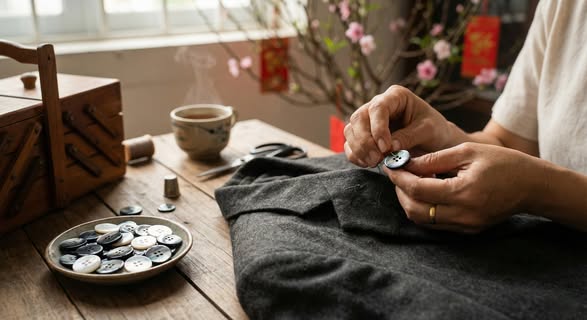
In fashion, some of the smallest details can say a great deal about a product. A button on a shirt, cardigan, or blazer is not only there to open and close the garment. It is a point of contact between the wearer and the clothing. It is where the hand naturally touches, where light catches the surface, and where a careful eye can sense the quality of a brand.
So when choosing shell buttons for shirts or luxury apparel, the right question is not simply: “Which button looks better?”
The better question is:
Which button best fits the spirit of the product, the fabric, the customer segment, and the production goal?
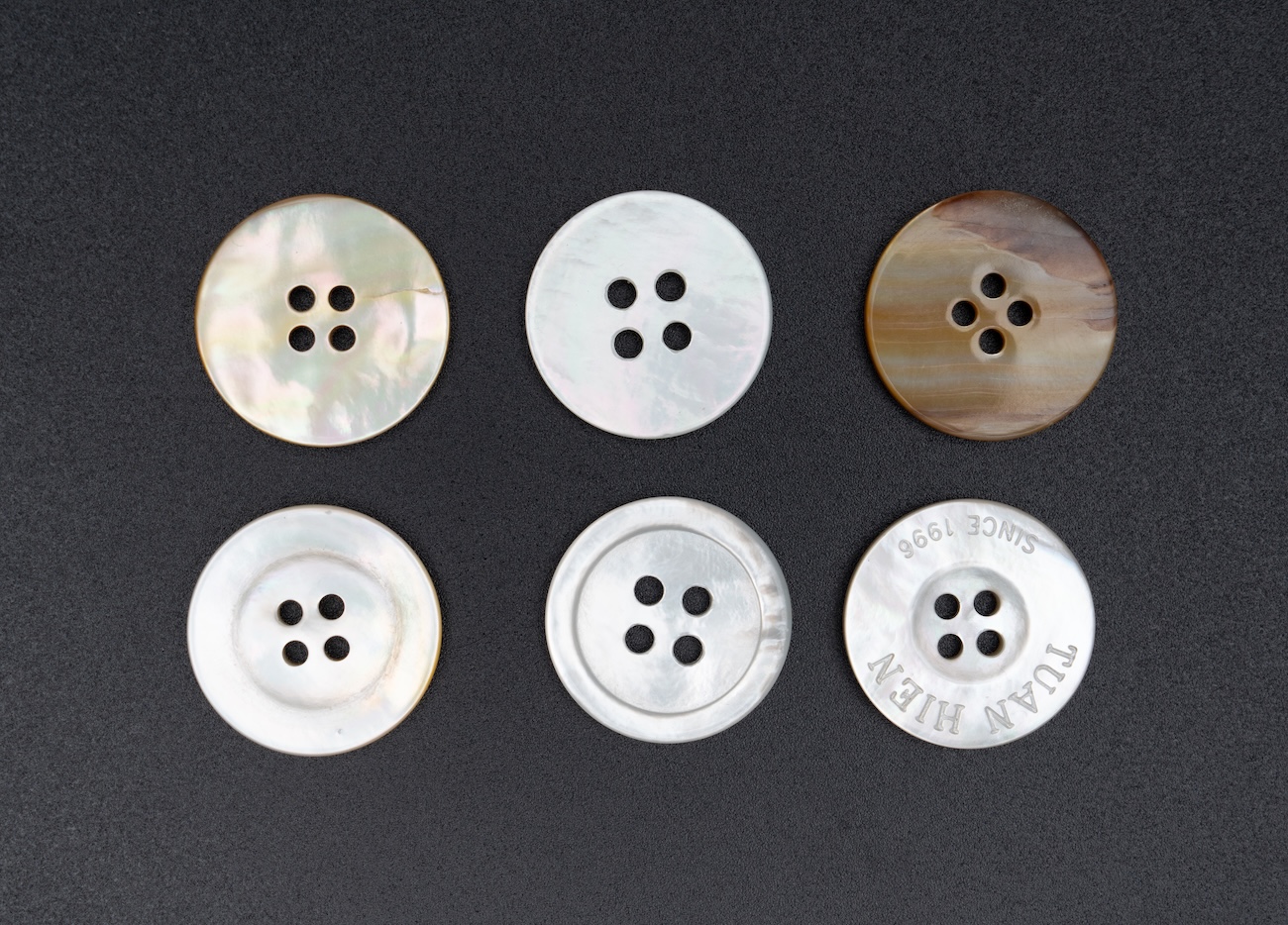
Among shell buttons, MOP and Trocas are two of the most popular choices. Both are natural materials. Both have their own beauty. Both can bring a premium feeling to a garment. But they are not the same. Each material has its own language.
MOP: The Beauty of Quiet Refinement
MOP – Mother of Pearl is loved for its soft, deep, natural pearlescent shine. It does not look loud or overly decorative. Its beauty is quiet. When placed on a well-made shirt, it gives the garment a clean, elegant, and refined feeling.
For premium shirts, formal shirts, tailoring, and luxury apparel, MOP is often a very strong choice. The reason is not only how it looks, but how it makes the product feel. A good MOP button does not need to stand out aggressively. But when viewed up close, it communicates quality.
MOP works especially well for products that need elegance: premium white shirts, linen shirts, compact cotton shirts, made-to-measure shirts, or collections designed for customers who appreciate subtle details.
However, MOP also requires careful selection. Because it is a natural material, each surface can have slight differences in reflection, tone, and pattern. For orders that require high consistency, buyers should clearly discuss color standards, shine, thickness, and tolerance with the supplier before bulk production.
In simple terms:
MOP is beautiful, but the more premium the product is, the more carefully QC should be managed.
Trocas: Stable, Practical, and Reliable
If MOP is more about elegance and refinement, Trocas is stronger in stability and practicality. Trocas usually offers good strength, a clean natural surface, and reliable performance for production.
For shirts, knitwear, casualwear, uniforms, or products that need seasonal repeat orders, Trocas is a very practical choice. It may not feel as “luxury-focused” as MOP at first glance, but it gives a durable, neat, and controlled result in bulk production.
This matters a lot for B2B buyers. A beautiful button is not enough. The button must also be stable in large quantities, easy to inspect, and reliable during production, packaging, and shipping.
Trocas is suitable for brands that need a balance between appearance, durability, and production efficiency. If your product needs a natural button that looks good, performs well, and can be reordered consistently, Trocas is worth considering.
For Shirts: Should You Choose MOP or Trocas?
Shirts are highly sensitive to button details. A button that looks too ordinary can make the whole shirt feel less premium. But a button that is too thick, too heavy, or not suitable for the fabric can also make the garment feel unbalanced.
If you are making dress shirts, premium shirts, made-to-measure shirts, or products positioned in a higher segment, MOP is usually the better choice. It adds depth, refinement, and a quiet sense of luxury. On white, light blue, beige, or neutral shirts, the natural shine of MOP can make the garment feel much more complete.
If you are producing shirts in larger quantities, casual shirts, uniforms, or products that need strong production stability, Trocas may be more suitable. Trocas helps buyers control quality more easily, especially when there are multiple batches or repeat orders.
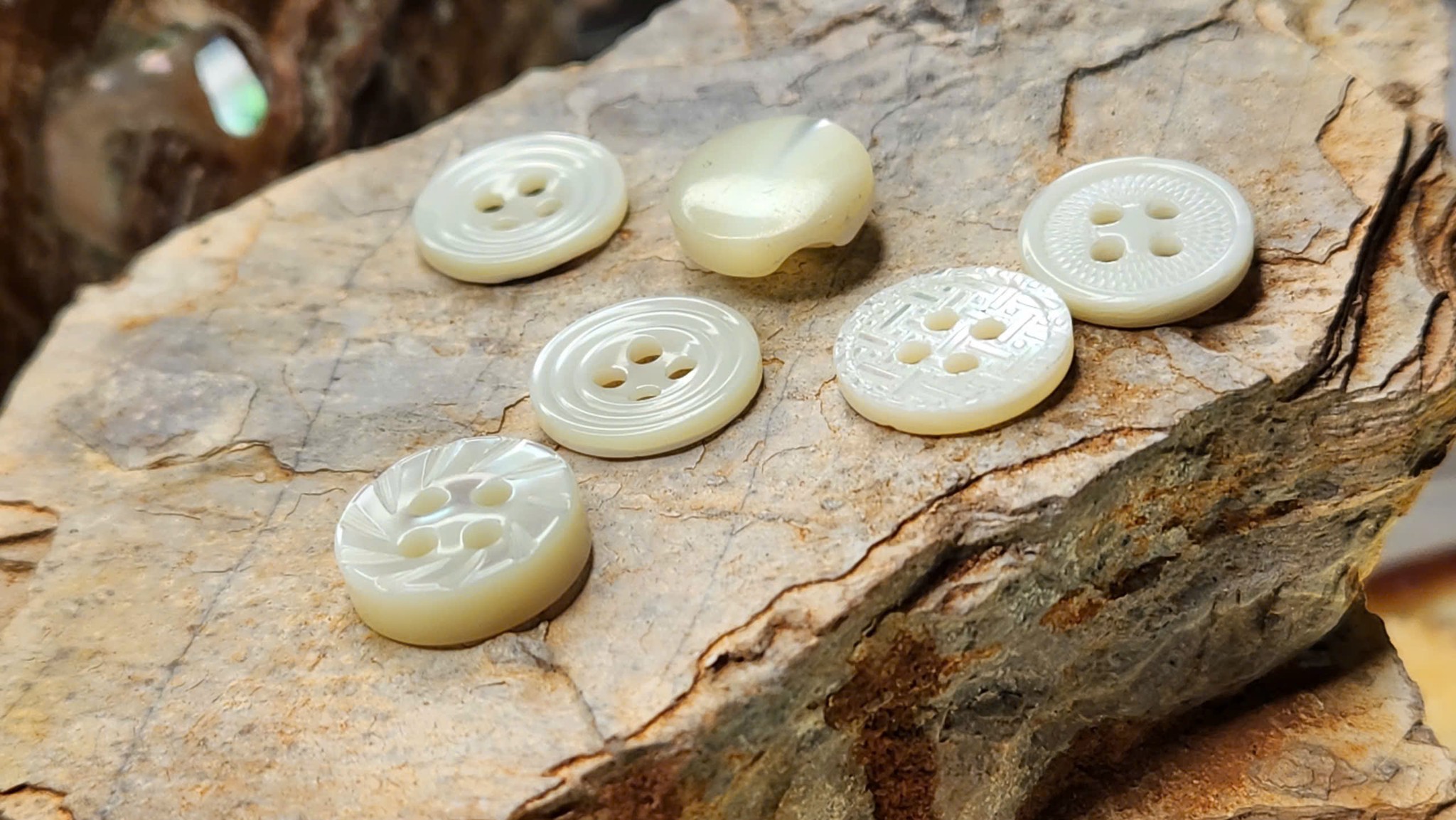
In short:
MOP is suitable for premium shirts that need a refined and elegant feeling.
Trocas is suitable for shirts that need durability, stability, and bulk production efficiency.
For Knitwear, Trocas Is Often the Safer Choice
Knitwear requires careful button selection. Knit fabrics are usually soft, flexible, and different in thickness. Buttons on knitwear often face more pulling, friction, and movement than buttons on regular woven shirts.
For cardigans, knit jackets, or garments that need stronger performance, Trocas is often the safer choice. It is natural, clean, and attractive, while still offering stability for real use and repeated production.
MOP can also be used for knitwear, especially luxury knitwear. But when using MOP, buyers should carefully check thickness, edge finishing, hole strength, and how the button performs on the actual garment. A MOP button may look beautiful by itself, but it may not always be the best match for a thick or stretchy knit surface.
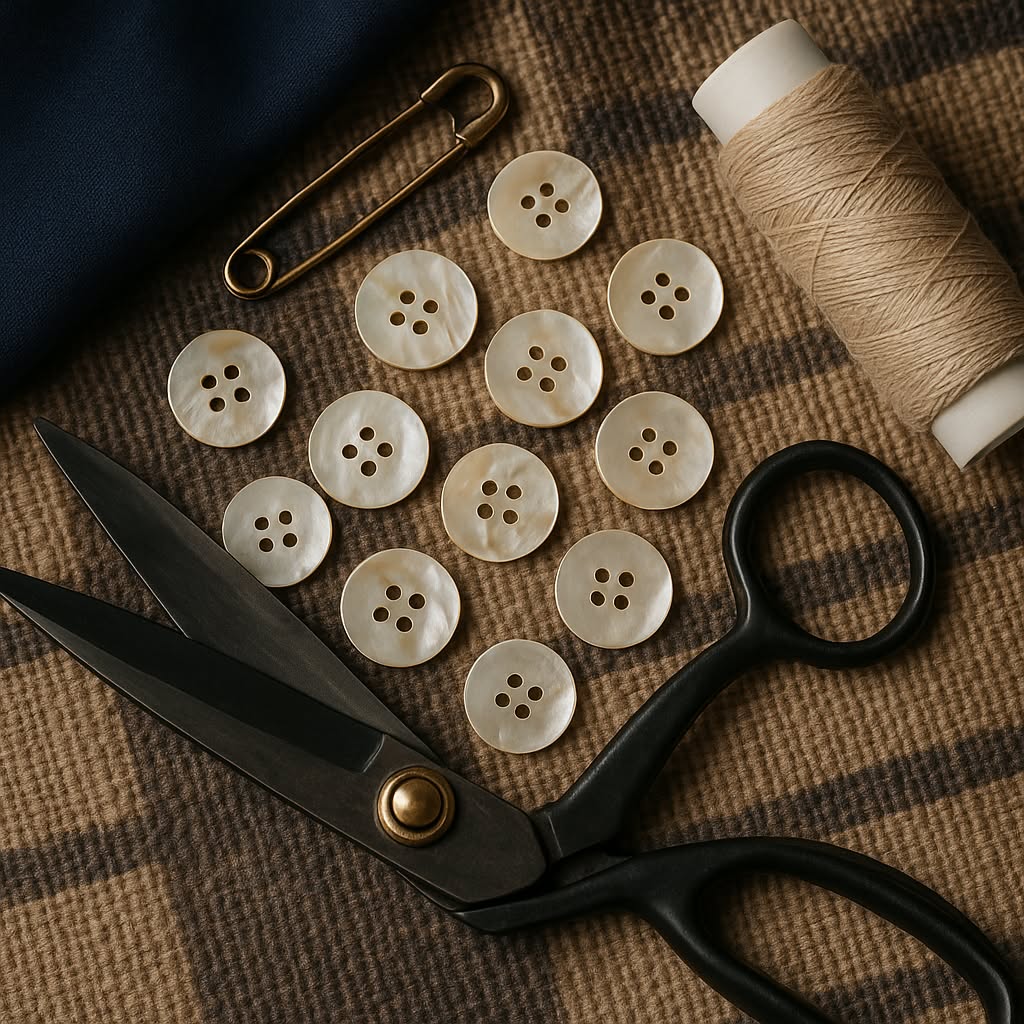
For knitwear, remember this:
A button is not only something to look at. It has to move with the fabric.
For Luxury Apparel, MOP Often Tells a Better Story
Luxury is not only about price. Luxury is about feeling: the feeling when touching the garment, fastening the button, and noticing that even the smallest detail has been considered.
In this sense, MOP often has an advantage. It offers a natural beauty, depth, and character that artificial materials can rarely replace. A good MOP button can make the wearer feel that the product has been carefully finished.
In luxury apparel, small details are never truly small. Buttons, stitching, lining, labels, fabric, and finishing all work together to create perceived value. MOP fits this idea well because it is not loud, but it is refined enough to lift the product.
That does not mean Trocas cannot be premium. For brands that follow a quiet, minimal, durable, and natural direction, Trocas can still be a beautiful choice. It does not try too hard to impress. Instead, it creates a sense of reliability, balance, and natural simplicity.
Buyers Should Choose Based on Product Goals, Not Only Appearance
A common mistake is choosing buttons only by looking at a photo or a loose sample. A button can look beautiful in the hand but may not work well on the actual garment.
That is why buyers should choose between MOP and Trocas based on the product goal.
If your product needs a premium look, natural shine, and a refined feeling for shirts or luxury apparel, start with MOP.
If your product needs stable production, durability, easier reordering, and good performance in bulk orders, consider Trocas.
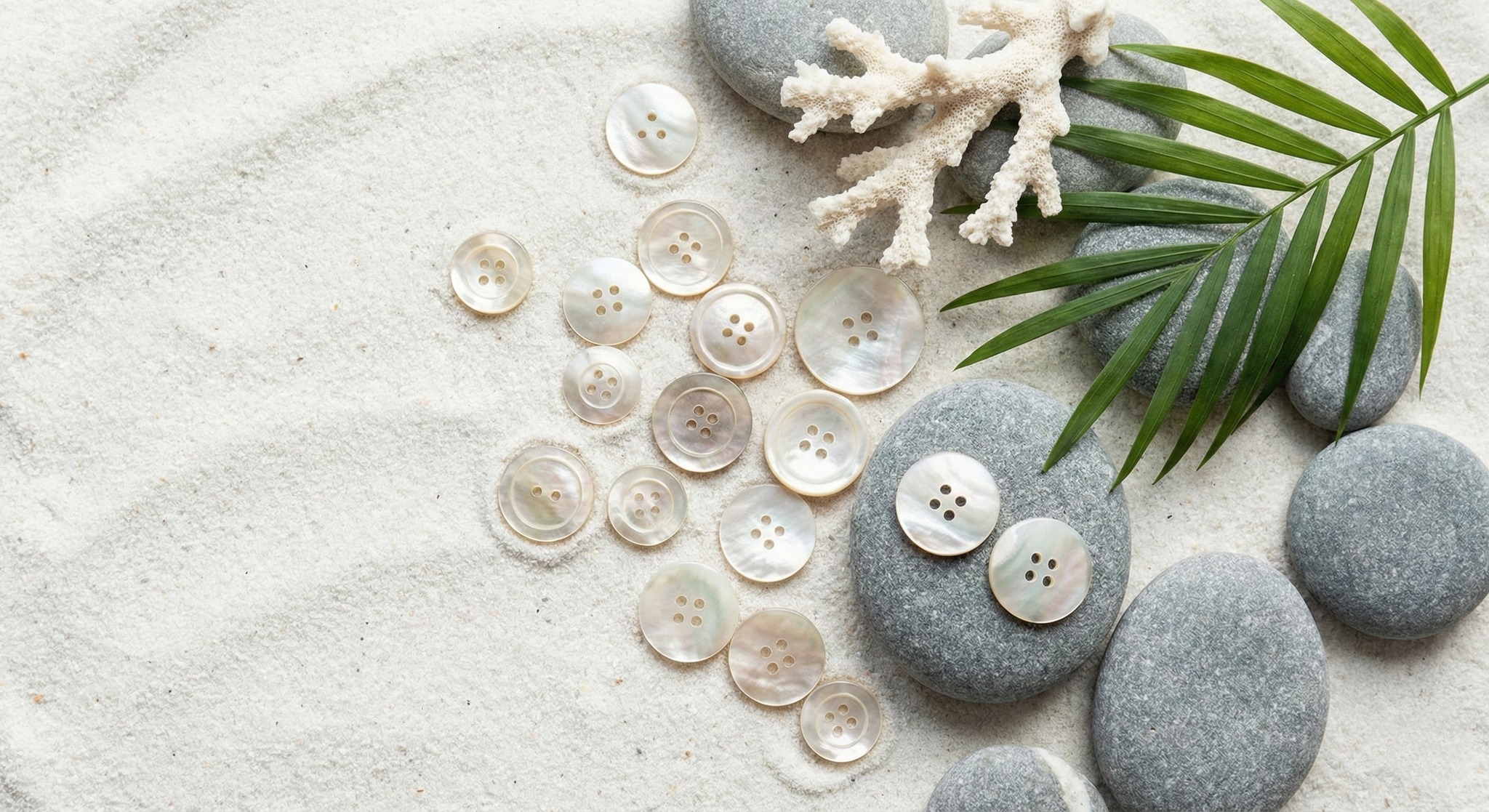
If you are still unsure, the best solution is to request samples and test them on the real garment. Place the button on the actual fabric, in the actual color, and in the actual position where it will be used. The answer often becomes much clearer.
What Buyers Should Check Before Ordering
Before sending an RFQ to a supplier, buyers should clarify several important points:
What type of product is the button for: shirts, knitwear, or luxury apparel?
What is the fabric?
What button size is required?
What thickness is needed?
Should the finish be matte, glossy, or polished?
Is logo engraving or laser marking required?
Is the order standard or OEM/custom?
What is the order quantity and reorder plan?
For MOP, buyers should pay special attention to color consistency, natural shine, and surface character.
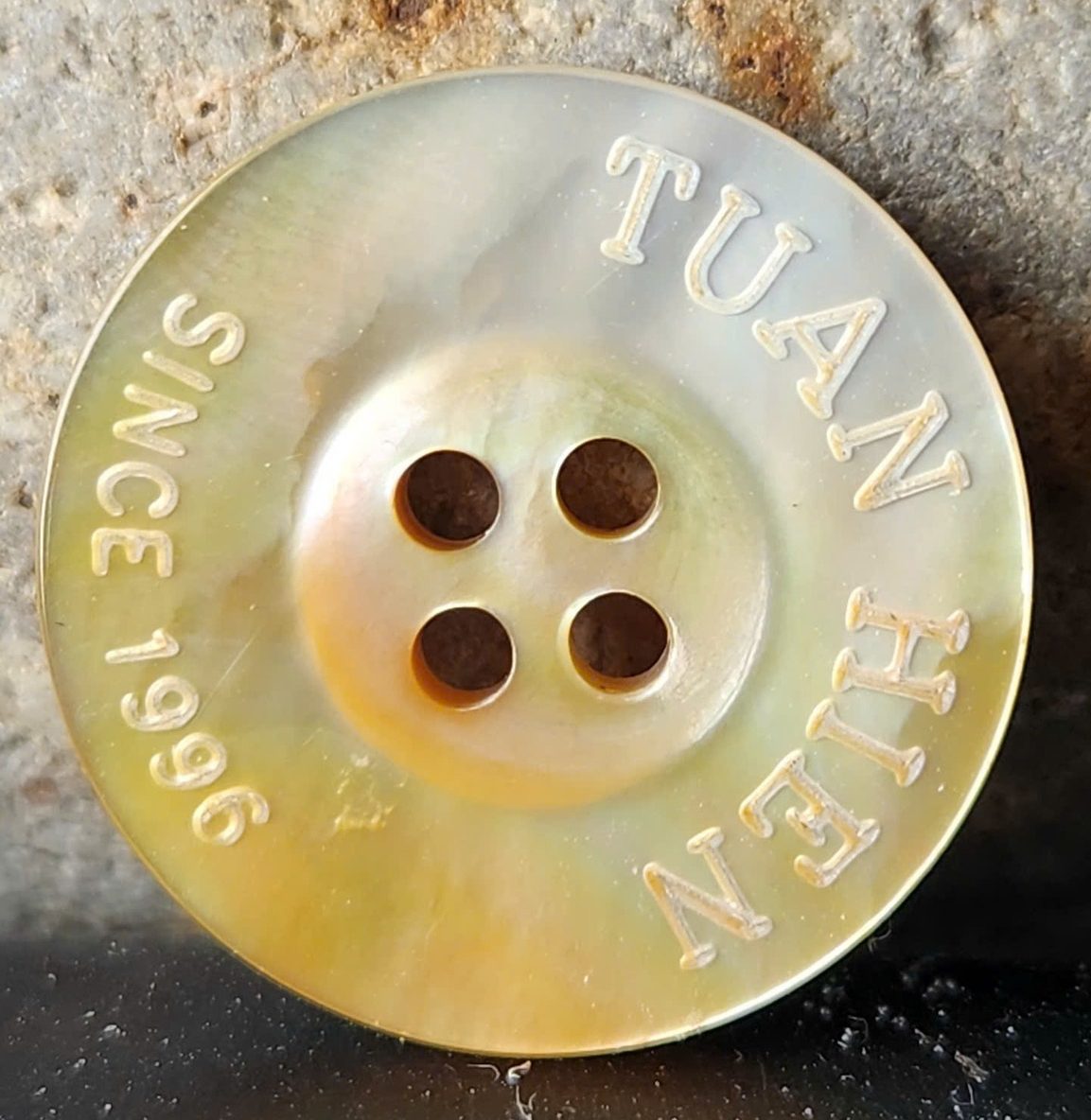
For Trocas, buyers should check thickness, strength, edge finishing, and batch-to-batch stability.
The clearer the RFQ is, the easier it is for the supplier to quote accurately and recommend the right material.
How Tuan Hien Can Support Buyers
For B2B buyers, choosing a button is not only about finding something beautiful. It is a decision connected to design, production, QC, packaging, and future reorders.
Tuan Hien can support buyers in choosing between MOP and Trocas based on product type, target market, aesthetic requirements, and real production needs.
If buyers need buttons for premium shirts or luxury apparel, Tuan Hien can advise on suitable MOP options in terms of size, thickness, and finish. If buyers need buttons for bulk shirts, knitwear, or products that require stable repeat production, Trocas may be the more practical choice.
Most importantly, buyers should send a clear RFQ with specifications, reference photos, and quality requirements. When the input is clear, material selection, sampling, and production become much more stable.
Conclusion
MOP and Trocas are not about which one is better in every situation. They are two different materials for two different needs.
MOP is suitable when you want a refined, premium, and higher perceived value.
Trocas is suitable when you need stability, durability, and practical performance in bulk production.
For shirts, MOP often makes the garment feel more elegant.
For knitwear or bulk production, Trocas is often easier to control.
For luxury apparel, MOP often tells a richer story, but Trocas can still work beautifully for brands that value simplicity, durability, and natural materials.
A good button is not only about material. It is about fit.
Fit with the fabric.
Fit with the design.
Fit with the wearer.
Fit with the production standard.
Fit with the spirit of the brand.
And when chosen well, a small shell button can make the entire product feel more complete.


